

What happens when logic, planning, and achievement can take you only so far, and when another form of knowing begins demanding attention? Melanie Soloway explores that question through her book Soul Mapping: The GPS to Your Life’s Purpose, which is part memoir, part field guide, and part workbook for anyone standing at a crossroads without a clear map.

For Soloway, that realization emerged from a life deeply rooted in logic. A former attorney and Deputy District Attorney in Los Angeles, travel humanitarian, and international speaker who tours Kenya and South Africa with Top Talent International keynote tours, she was trained to value evidence and analysis. But some of the most important turns in her life didn’t come from careful calculation. They began with disruption.
When the Plan Breaks
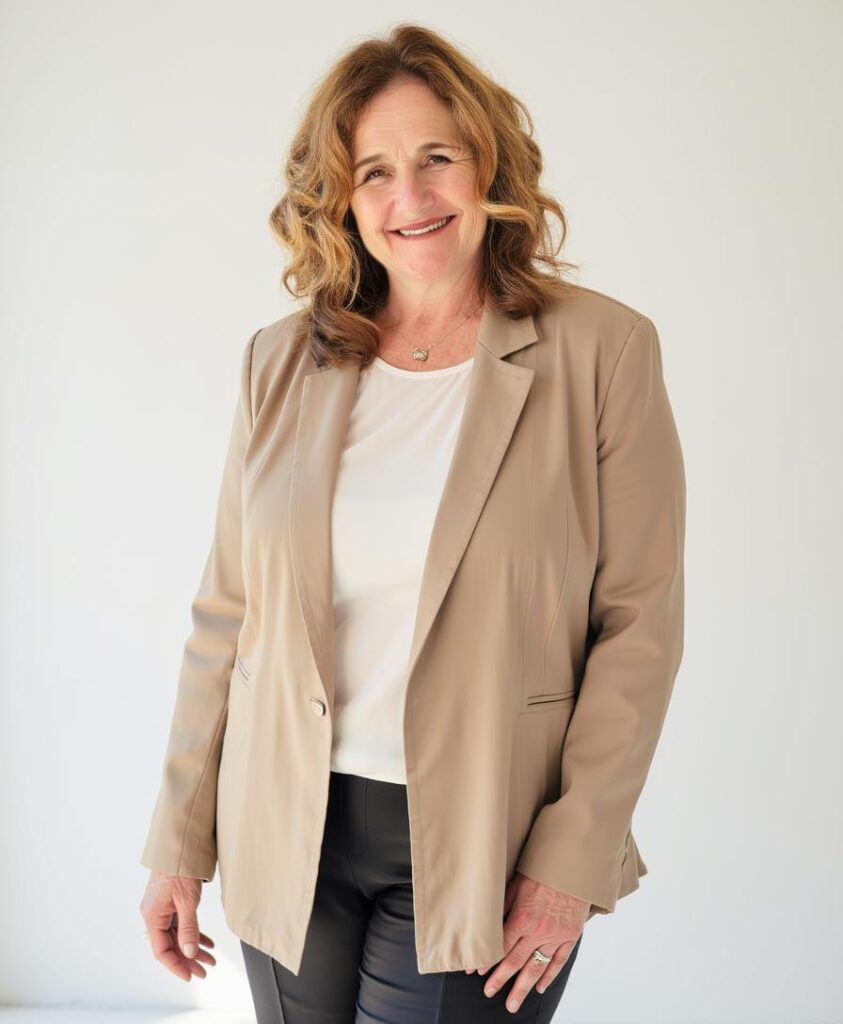
Soloway grew up in South Africa during a period of formal racial separation and gender discrimination. She pursued achievement anyway. After moving to Los Angeles in 1985, she graduated cum laude and entered law school, building toward the future she had envisioned.
Then her father was diagnosed with cancer during her first year. Grief and pressure contributed to her failing the year. She later came to understand that she had also been struggling with functional dyslexia, something she did not recognize at the time. Because her student visa required her to remain in school, she applied to an evening law program in Los Angeles. An admissions director named Cookie, who had also lost her father to cancer, helped arrange her admission after the academic year had already begun.
What initially looked like failure became, in Soloway’s understanding, a redirection. That experience eventually shaped one of the central ideas in Soul Mapping: life does not always follow a predetermined blueprint.
The Bridge Between Mind and Intuition
Soloway calls this alternative a “soulprint.” A blueprint assumes that the destination is known and the task is to follow the plan. A soulprint allows purpose to unfold through experience, uncertainty, and decisions that could not have been anticipated.
Her framework brings together the heart, mind, and soul. The heart represents values, desires, and emotional intelligence. The mind provides reason, analysis, and discernment. The soul represents a deeper sense of purpose beyond roles, achievements, and failures. From there, the book identifies three forms of knowing: rational knowing, grounded in logic and evidence; intuitive knowing, the hunches and gut feelings that arrive faster than analysis; and synchronic knowing, the meaningful coincidences, dreams, and recurring patterns that Soloway experiences as guidance. Soul Mapping does not rank them. It asks the reader to use all three.
Research offers some context for why that balance is worth considering. A 2008 study published in Nature Neuroscience found that patterns of brain activity associated with a simple decision could be detected up to 10 seconds before participants reported becoming aware of their choice. A 2025 paper in Neuroscience of Consciousness similarly describes intuition as rapid, nonconscious information processing, useful in some circumstances and unreliable in others.
That caveat fits the balance at the center of Soloway’s philosophy. A gut feeling is not automatically true. It can be a starting point for investigation.
Attention Is Another Foundation of Soul Mapping
Soloway uses the reticular activating system, or RAS, to explain why people suddenly begin noticing things that have become important to them. Decide to buy a particular car, and suddenly the same model seems to be everywhere. The world has not changed. Your attention has. Her principle of “paying attention to what you pay attention to” suggests that the thoughts and patterns that repeatedly capture our notice may reveal what matters beneath conscious awareness.
In the book, this becomes one of the first exercises readers try. They write down a specific question, such as “What is the next step in my career?”, keep it visible, and log whatever catches their attention over the following day or two. The aim, Soloway stresses, is not to force meaning where none exists.
Her interpretation of certain coincidences as spiritual guidance belongs to her personal experience and framework rather than established neuroscience, and the book’s later chapters suggest she is well aware of the difference.
Intuition Still Needs Evidence
Soloway’s legal career gives her approach an important counterweight. As a prosecutor, she describes sensing that a witness was not telling the whole story before she could identify the specific contradiction. That feeling could not be presented as evidence in court. It could, however, tell her where to investigate.
That distinction may be the clearest expression of Soul Mapping. Intuition can point toward a question. Logic can test the answer.
The same principle anchors one of the book’s most substantial sections. After chapters devoted to learning how to listen, Soloway turns to discernment, a practice she calls “sacred questioning.” Drawing on Heaven’s Gate, Jonestown, and NXIVM, along with research on obedience, conformity, and confirmation bias, she argues that openness without scrutiny is a vulnerability. Readers are given questions to ask about teachers, groups, and relationships, starting with whether they encourage questions or punish them. It is an unusual inclusion in a book about intuition, and a deliberate one. Soloway treats the meaning a person assigns to a sign as a hypothesis, something to be tested against evidence and the reader’s own values.
How the Book Is Built
Soul Mapping is organized into four parts. The Foundations of Soul Mapping introduces the framework and the science behind it, from the RAS to the brain networks behind intuition. The Tools of Alignment covers synchronicity, the inner GPS, and intuition as a compass. The Journey in Action turns to lived application, including two trips to South Africa twelve years apart and a chapter of daily practices. The Wisdom Tradition places Soul Mapping alongside the Stoicism of Marcus Aurelius, Carl Jung’s work on individuation, and the discernment chapters.
Most chapters follow the same rhythm: a story from Soloway’s life, the research or philosophy that helps explain it, and a practice the reader can begin right away. Her father’s death, her years as a prosecutor, the end of her marriage, and the years she spent separated from her twin sons are not presented as backstory. Each becomes a case study in what happens when inner guidance is heeded, and what happens when it is overridden.
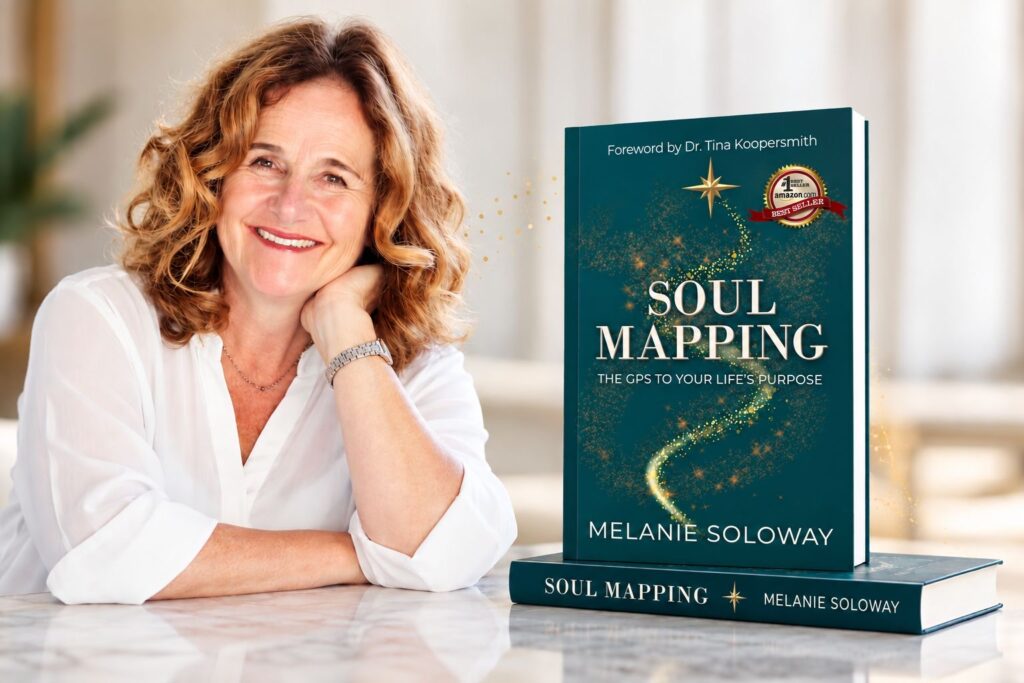
A Book Meant to Be Written In
Soul Mapping is designed to be worked through rather than simply read, and the method itself grew out of journaling. After her father’s death, Soloway approached the signs she was noticing the way a lawyer builds a case, filling journal after journal with what she observed. Years later, forgotten entries would resurface exactly when she needed them. That, she writes, was when she understood Soul Mapping: “a living record of your soul’s wisdom across time.”
The exercises invite readers to build their own. The Signs Journal asks them to spend thirty days recording coincidences that feel meaningful, then review the entries for patterns. The Body Check is a pause before significant decisions, one hand on the heart and one on the belly, to notice whether the body feels open or closed. The Two-Second Check asks readers to rate their first reaction to a new person or situation from one to ten and later compare it with how things unfolded, in effect testing intuition against evidence. Layers of Self separates the persona and the beliefs absorbed from family and culture from what the reader knows to be true independent of both.
A chapter on daily life pulls these threads into a fifteen-minute routine: the Arrival, the Gratitude Anchor, the Soul Question, the Intention Setting, and an evening Closing review. Soloway presents it as guidelines rather than rules.
What Readers Take Away
Soloway is explicit that the book does not hand the reader a destination. In her words, it offers “a language, a practice, and the testimony of a life.” What readers leave with is concrete: a way of telling anxiety, which is loud and focused on the future, from intuition, which is quiet and present tense; a routine short enough to sustain; and a personal record that becomes more useful over time. When a question like “What should I do with my life?” is too large to answer, the book suggests shrinking it to the one thing the reader can do today that aligns with what they most deeply value.
Listening to Both
Soloway’s own journey followed that pattern. Her father’s illness disrupted the future she had planned. Failing law school forced her onto a different path. Later, experiences she could not rationally explain pushed her to pay attention to signals she had previously dismissed.
What emerged was not a rejection of the rational mind, but a broader understanding of how people navigate uncertainty. Sometimes the question is not whether you should trust your head or your heart. It is whether you have learned to listen to both. For Soloway, Soul Mapping begins there: with the recognition that you may not need the entire map to move forward. You may only need enough awareness, discernment, and trust to recognize the next step.
Melanie Soloway’s Soul Mapping: The GPS to Your Life’s Purpose is available now on Amazon

To ensure diverse coverage and expert insight across a wide range of topics, our publication features contributions from multiple staff writers with varied areas of expertise.
