

When I was invited to participate in an upcoming documentary follow-up to Trust Me: The False Prophet, centered on sisters Shandra and Marona Johnson, I knew almost immediately what my role was not. I was not there to rescue them. I was there to witness them.

Under the direction and production of Sir David Fagan, the project is being created through a commitment to Radical Ethical Filmmaking, an approach that asks us to consider not only the story being told, but how the people whose lives we are entering are treated in the telling of it. That mattered enormously to me.
I have the honor of participating as a producer and on-camera contributor in an upcoming documentary follow-up to Trust Me: The False Prophet, centered on sisters Shandra and Marona Johnson. I bring to the project more than 25 years of experience working through the body and movement, along with my work in nervous system regulation and embodied resilience. My role is not to swoop in as a savior or tell these
young women what their lives should look like, but to offer compassionate witnessing, support, and tools that may help them reconnect with themselves and rebuild self-trust.
But there was another reason I said yes.I know something about losing the structures that once helped tell you who you were. I know what it is to navigate emotional abuse and the confusion it creates. More recently, the Eaton Fire took my home and Pilates studio, abruptly removing physical pieces of an identity I had spent decades building.
My story is not these young women’s story. I would never pretend that it is. But I understand something about finding yourself standing amid the remains of what once felt familiar and asking: Who am I now? What can I trust? Can I trust myself?
That gives me enormous compassion for them.
Familiar Does Not Always Mean Safe
One of the themes I kept returning to as we prepared for filming was belonging.
I might even argue that belonging is a survival instinct.
Human beings have historically survived in community. We are wired to seek connection, familiarity, and the security of being among people who understand our world. Our nervous systems therefore have an interesting tendency: they can interpret familiar as safe. But familiar and safe are not necessarily the same thing. From the outside, it can be easy to look at someone’s circumstances and wonder, Why would she stay? Why would she believe that? Why didn’t she simply leave? From the inside, the equation is far more complicated. Leaving can mean risking your family, community, identity, beliefs, support system, and the only world you have ever known. The unknown itself can feel threatening. And if an environment once provided connection, purpose, or security, a person may continue hoping it will become what it once seemed to be.
That is one reason I believe compassion is essential before judgment.
When You Begin to Question Your Own Reality
I also recognize patterns in this story that can occur in emotionally manipulative and coercive relationships. There may be criticism followed by kindness. Control followed by praise. Gaslighting followed by reassurance. Just enough encouragement gets sprinkled in to keep a person hoping and trying harder for the next moment of approval.
The brain keeps searching for the reward. The person keeps thinking, “Maybe if I do this differently…” It becomes profoundly disorienting. That dynamic becomes even more complicated when someone has been positioned as a prophet, protector, provider, or wise guide. Tragically, the person expected to provide protection can become the very person from whom protection is needed. Having navigated emotional abuse myself, I know how much easier those dynamics can be to recognize from the outside than while you are living inside them.
Distance changes perspective.
What happens when belief and experience collide? Another question stayed with me throughout our pre-production work: What happens when inherited beliefs have shaped so much of a person’s identity that there has been little room to discover what she actually believes? Our beliefs help shape our values. Our values help shape our identity. And all of those influence our decisions.
When lived experience suddenly conflicts with what someone has been taught to believe, confusion can descend like a cloud. What is real? Who can I trust? What if everything I believed was wrong? And perhaps most painfully: Can I trust myself to know the difference? That is one reason I believe it is so much easier to judge another person’s decision from the outside than to understand it from the inside. The observer is not experiencing all of the forces acting upon the decision-maker: relationships, conditioning, faith, values, fear, hope, belonging, and even the state of a nervous system whose primary job is survival.
Rebuilding Self-Trust Happens Slowly
So how does someone learn to trust herself again after years of looking outside herself for answers? Slowly. S-L-O-W-L-Y. There is rarely one grand moment in which self-trust magically returns. It can begin with one small decision. Make the decision. Observe what happens as objectively as possible. If the outcome aligns with what you hoped for, celebrate it. Really celebrate it. Our brains need those moments of reward to help reinforce new pathways forward. I also encourage people to begin reconnecting with the wisdom and information available through their bodies. Sometimes that means “trying on” a decision before acting on it. Imagine for a day that you have already said yes. What happens in your body? Do you notice greater steadiness, openness, or peace? Or are you moving into fight, flight, constriction, or shutdown? The body’s response is not an infallible oracle, and nervous system activation does not automatically mean a decision is wrong. But learning to notice our internal experience can be an important part of rebuilding a relationship with ourselves after years of being taught to override it.
Witnessing Instead of Saving
Perhaps that is why the project’s commitment to Radical Ethical Filmmaking resonates so deeply with me. Sir David Fagan has brought together a supporting cast and group of on-camera contributors whose backgrounds and perspectives are remarkably diverse: Ruth Allman, Dr. DeAndrea Fleming, Dr. Kelley Gurley, Dr. Tina Koopersmith, Dr. Leslie Latimore-Lorfils, Angela Legh, Justine Reiss, Melanie Soloway, and Me. What has struck me is not simply the range of experience represented in that group, but the shared intention beneath it. Curiosity. Compassion. Nonjudgmental support. A heart-centered commitment to meeting these young women where they are rather than deciding where we think they should be. We are not there to prescribe the Johnson sisters’ futures. We are not there to become their rescuers. The rescuer role can carry an unintended message: I know what is best for you. Compassionate witnessing says something very different: I see you. I am willing to sit beside you. And I believe in your capacity to discover what is right for you. That, to me, is where the Radical Ethical Filmmaking commitment becomes much more than a production philosophy. It becomes a way of relating to another human being whose story you have been entrusted to help tell. My hope is that viewers leave this project understanding just how complex the human experience really is, and how many of the forces shaping our decisions operate quietly beneath the surface. I hope we become a little slower to ask, “How could someone do that?” and a little more curious about, “What might have made that feel like the safest choice available to her at the time?”Most of all, I hope viewers see what I have come to believe very deeply through both my work and my own life: The human spirit is extraordinarily resilient. We are wired to survive. And when survival is met with safety, compassion, connection, and the resources to heal, we can do more than survive. We can rebuild trust. We can rediscover ourselves. And we can rise.
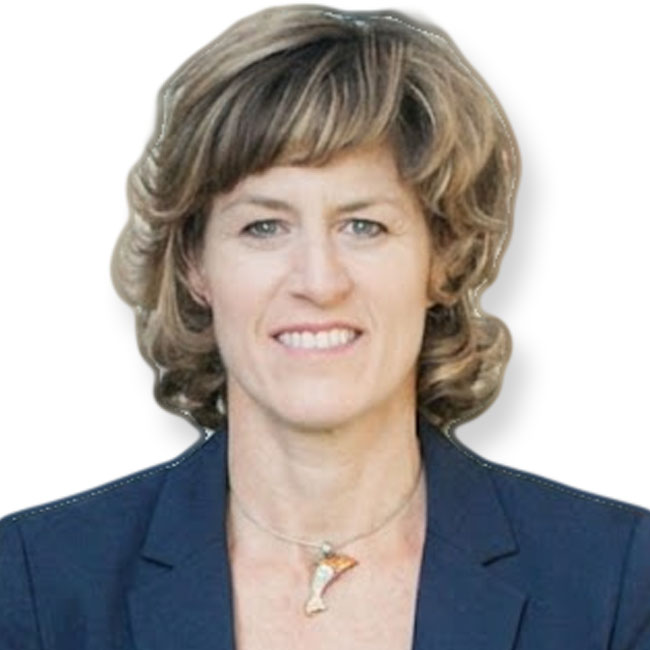
Kelly Etter is an embodied resilience and movement specialist who helps people rebuild strength, self-trust, and nervous-system regulation through practical, body-based tools.
