
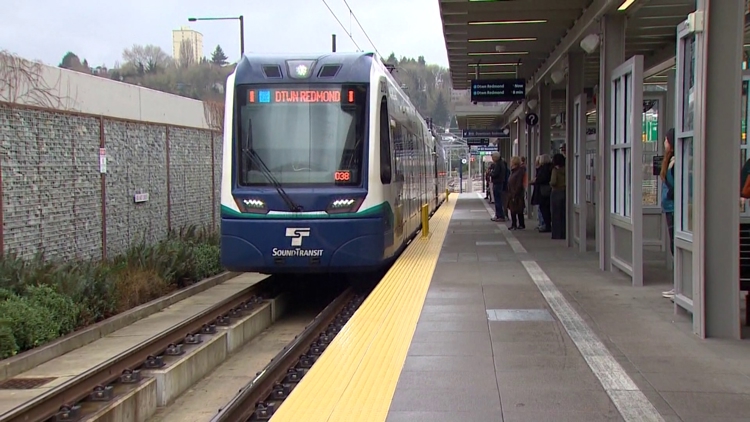
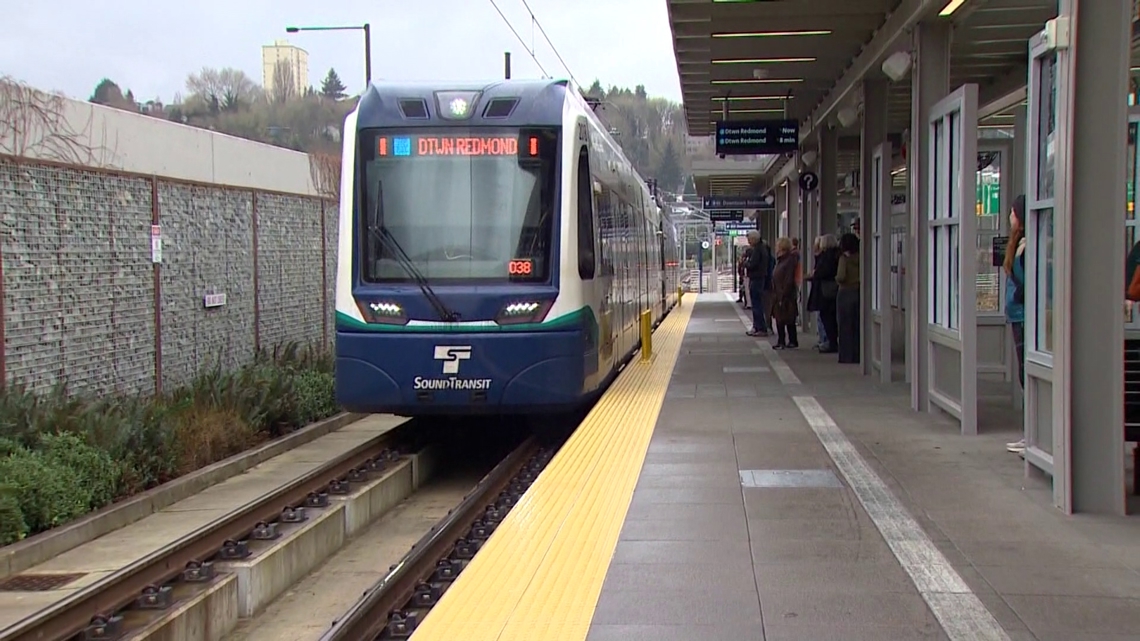
Sound Transit passes funding gap plan, prompting a sweeping overhaul of its ST3 expansion plan and delaying some projects while seeking new revenue sources.

SEATTLE — Sound Transit’s governing board approved a sweeping overhaul of its voter-approved ST3 expansion plan Thursday, acknowledging a projected $34.5 billion funding gap that agency leaders say makes the original schedule unaffordable.
The vote follows months of discussion over rising construction costs, inflation, lower-than-expected revenues and increasing operating expenses that have left the agency unable to fully fund the regional transit expansion package voters approved in 2016.
An overflow crowd packed Sound Transit’s board meeting at Union Station, where transit advocates and riders urged board members to preserve projects promised to communities across the region.
Voters approved ST3 in 2016, authorizing taxes to fund major transit investments including light rail extensions to West Seattle, Ballard, Tacoma and Everett. But Sound Transit leaders now say the original delivery schedule can no longer be supported by current financial projections.
“The original delivery schedule is no longer affordable,” Sound Transit Board Chair Dave Somers told the board. “That’s a hard truth we’ve been facing for the last year.”
Under the revised plan, some projects remain fully funded while others are delayed, phased or left without construction funding for now.
Among the most visible changes is the West Seattle Link Extension. The project remains funded, but the planned Avalon Station is no longer included in the fully funded package. In Seattle, only the initial Ballard Link segment to Seattle Center is fully funded under the plan, while the extension from Seattle Center to Market Street in Ballard would require additional funding before construction could move forward.
Sound Transit leaders say the revised plan allows the agency to continue advancing projects while aligning long-term costs with available revenue.
The agency has also explored additional revenue sources and cost-saving measures, including fare gates, revenue from Washington’s Clean Fuels Standard carbon credit program and other operational changes.
Transit advocates who attended the meeting urged the board not to delay projects further.
“The build the damn trains coalition wanted to see light rail lines not be cut,” Transportation Choices Coalition Executive Director Kirk Hovenkotter told the board. “To keep projects moving because they only get more expensive the longer we wait and to have the board remember we are all in this together as one region.”
Ballard supporters pressed the board for greater certainty about when service could reach their neighborhood, arguing that delays have made residents skeptical about future timelines.
“We don’t trust that they’ll get to us if we don’t get a date,” Save Ballard Rail advocate Jonatan Gonzalez told the board while supporting an amendment seeking a clearer timeline for Ballard service.
Sound Transit CEO Dow Constantine told board members the agency is legally required to adopt a system plan that matches current long-range financial projections. Agency officials say the largest funding challenges emerge in the mid-2030s, requiring difficult decisions now to avoid larger problems later.
The board ultimately approved an amendment requiring Sound Transit to provide the public with a fixed date or date range for when service is expected to begin at Smith Cove, Interbay and Ballard stations by Aug. 1, 2026.
Despite the revisions, Sound Transit leaders emphasized that they remain committed to eventually delivering the broader ST3 vision as additional funding, cost savings or new revenue sources become available.
Deferred projects due to lack of resources:
- Tacoma Dome Link Extension Parking
- Everett Link Extension Parking
- Stride Bus Rapid Transit Parking
- North Sammamish Park-and-Ride
- Edmonds and Mukilteo Parking and Access Improvements
- Bus on Shoulder project
- SR 162 Corridor Improvements
- Sounder South Platform Extensions
- Sounder South Station Access Improvements
- ST Express Bus Base, remainder
List of fully funded projects to be completed through construction:
- Tacoma Dome Access Improvements
- West Seattle Link Extension, no Avalon Station
- Renton Transit Center Parking Garage
- Tacoma Dome Link Extension
- Everett Link Extension, phase 1
- Everett Link Extension, phase 2
- Ballard Link Extension, initial segment to Seattle Center
- TCC Tacoma Link Extension (now 2043)
- South Kirkland – Issaquah Link (now 2050)
- Link Operations and Maintenance Facility South
- Link Operations and Maintenance Facility North
- Graham Street Station
- Sounder Maintenance Base
Projects that are partially funded through the planning and design phase:
- Ballard Link Extension, final design phase
- Boeing Access Road Station, final design phase
- Sounder South additional trips (partially funded)
- DuPont Sounder Extension, planning phase
- Regional Parking Fund
- ST Express Bus Base (partially funded)
- High-capacity transit corridor studies/ST4 planning (partially funded)
Unaffordable projects within current resources:
- Ballard Link Extension, Seattle Center to Market Street
- Boeing Access Road infill station
- Sounder additional trips
- DuPont Sounder Extension, final design and construction
- High-capacity transit corridor studies/ST4 planning

To ensure diverse coverage and expert insight across a wide range of topics, our publication features contributions from multiple staff writers with varied areas of expertise.
