
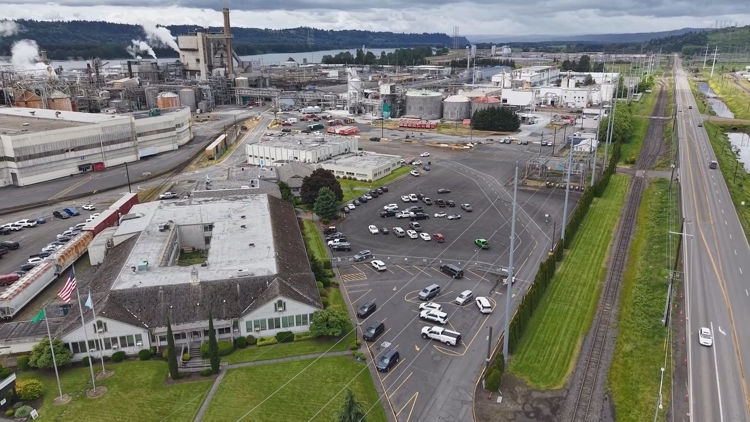
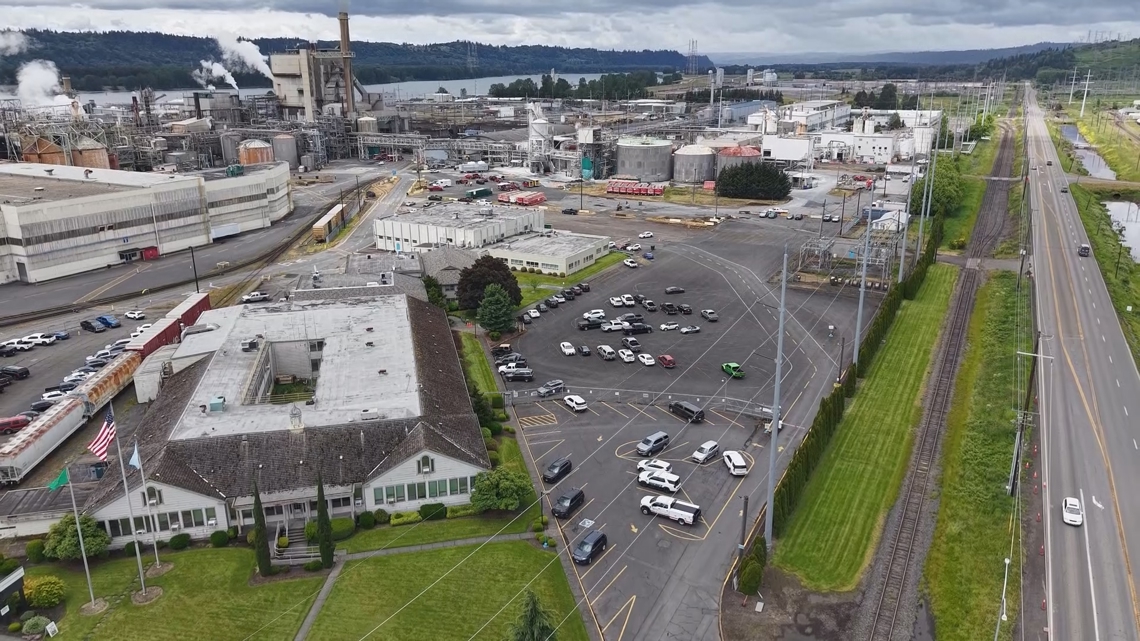
Water samples taken overnight confirmed that chemicals leaked into the river when a 900,000-gallon tank containing caustic “white liquor” ruptured.

LONGVIEW, Wash. — The Columbia River was contaminated by chemicals from the tank rupture at the Nippon Dynawave Packaging facility in Longview, officials confirmed Wednesday. The extent of the contamination is unknown.
Water samples taken overnight confirmed that chemicals leaked into the river when a 900,000-gallon tank of “white liquor” ruptured, with an estimated 25,000 gallons of the highly caustic solution still inside, officials said at a Wednesday briefing. Officials estimated that the tank was about 60% full at the time of the blast.
The highly alkaline chemical is used to dissolve wood chips in the papermaking process.
“Additional evaluations are underway to better understand the scope and extent of that environmental impact,” Cowlitz Fire and Rescue Chief Scott Goldstein said
No health impacts to air quality or Longview’s drinking water system have been identified, Goldstein said. Officials plan to continue monitoring air and water quality.
The public has been directed to stay away from dikes and ditches between Washington Way and Prudential Boulevard due to contaminated water discharged through the Nippon Dynawave storm drains. Washington Governor Bob Ferguson said that about a dozen carp had been spotted dead in those waterways.
Two people are confirmed dead and several more are injured from the disaster, which occurred early Tuesday morning at Nippon Dynawave Packaging, a kraft pulp and paper mill along the Columbia River on Longview’s Industrial Way. Nine people remain missing and are presumed dead.
Recovery efforts will continue Wednesday, officials said. Ferguson said the incident could be one of the “deadliest industrial tragedies in modern Washington state history.”

To ensure diverse coverage and expert insight across a wide range of topics, our publication features contributions from multiple staff writers with varied areas of expertise.
