
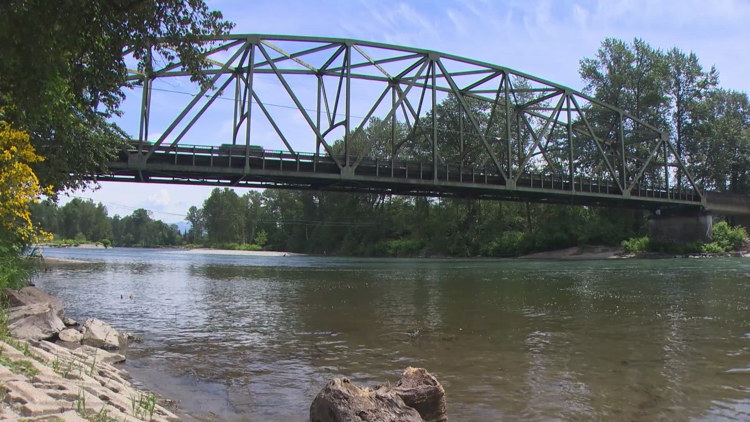
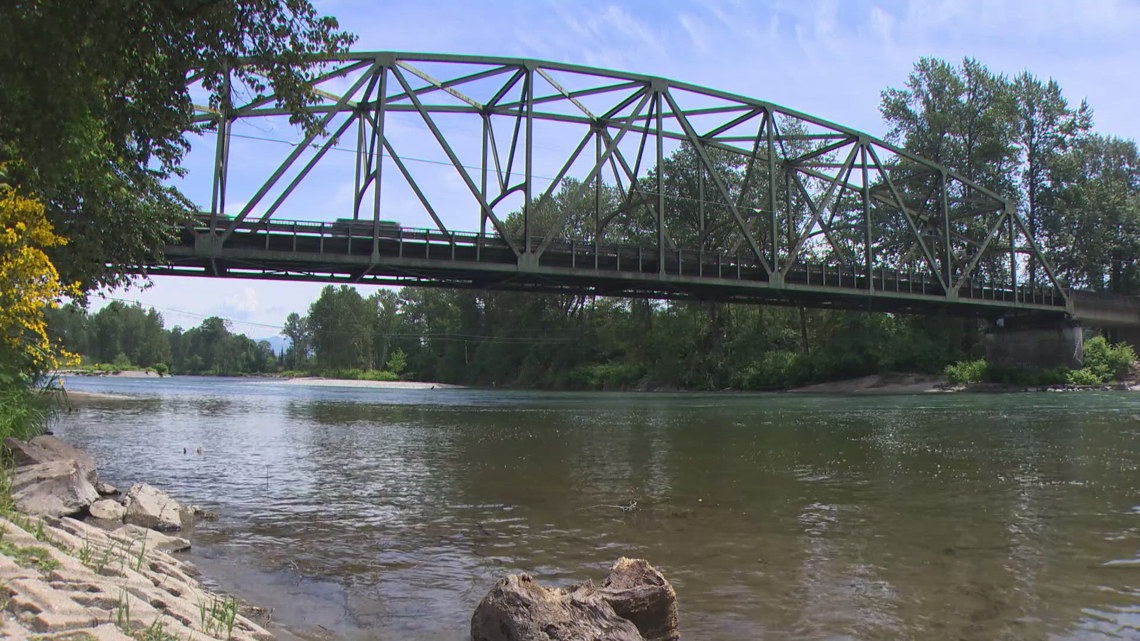
Ten years after a near-fatal kayaking incident, Nichole Gaertner reunites with one of her rescuers, highlighting river safety and the dangers of hidden debris.

MONROE, Wash. — Ten years after Nichole Gaertner nearly drowned in the Skykomish River, she came face-to-face with one of the firefighters who helped saved her life.
“Meeting the person that is the reason why I’m still here today is pretty amazing,” Gaertner said.
On May 10, 2016, Gaertner and a group of friends set out on what was supposed to be a warm-weather kayak trip.
“It was a group of friends and we were excited and we had taken the day off work and it was 86 degrees out,” Gaertner said. “We had the big ambition we were going to float down in our kayaks to Everett.”
But what looked like a good day to be on the water quickly became life-threatening.
Gaertner said the group was not prepared for hidden strainers — dangerous river debris, including downed trees and root balls, that water can flow through but people can become pinned against.
“We weren’t really prepared for the hidden strainers and banks that had come down,” she said.
Gaertner said her kayak flipped after she tried to help a friend. She was pulled under and became stuck against a tree along the riverbank.
“When I finally came up I was able to grab on to one of the roots and pushed myself up and my lifejacket had come up and I was being waterboarded by it,” she said.
At that point, she didn’t know if her friends had survived. She said she held onto a branch to keep herself from being swept away.
“I got my arms like lodged into the branch above me because I knew if I was going to pass out I would float away and I didn’t want my body to get lost,” Gaertner said.
It took crews about 45 minutes to find her. Another firefighter, Jeff Zhorn, helped reach her in the water before she was pulled out.
“Jeff pulled me up and he said I need you to hold on, this could be really hard,” Gaertner said. “When they finally pulled me out, I was unresponsive.”
Snohomish Regional Fire and Rescue, Snohomish Fire District 5 in Sultan and Sky Valley Fire were among the agencies that helped with the rescue.
Firefighter Paramedic Pete Parrish with Snohomish Regional Fire & Rescue said Gaertner’s story stayed with him.
“Nichole’s been on my heart for the last decade,” Parrish said. “Knowing that her life was spared that day and that she went on to live a beautiful life for the last ten years, that’s been a real positive thing in my life not only in my life but in my career.”
Parrish said first responders see tragedy often, but rescues like Gaertner’s are the calls they carry in a different way.
“Our career is full of tragedy and death as a first responder,” Parrish said. “Your life story and life in general and we’re a part of saving it has really helped me in a positive manner.”
For Parrish, the reunion also came with a message: western Washington’s rivers and lakes can be especially dangerous this time of year.
“Just because the sun is out and it’s a beautiful day doesn’t mean the water is safe due to temperature and hazards,” Parrish said.
He said every spring, runoff changes the river. Flooding can also move debris, reshape riverbanks and create new hazards.
“Every spring during run off, the river changes, not to mention river floods, we had a big one this year and the water is not the same as it was,” Parrish said. “Going out in a waterway that’s not scouted or you don’t have information about, that’s danger number one.”
That warning carries added weight this year after extreme flooding hit Washington in December. Many people were under flood watches in western Washington during the December atmospheric river event. The state was under an emergency as torrential rain sent rivers over their banks, caused mudslides and trapped people in floodwaters.
Parrish said the cold water itself can be just as dangerous as the debris.
“The cold water is just as dangerous as the debris in the rivers and the lakes,” Parrish said. “Cold water, you get in it you think you’re fine, you cramp up, you hyperventilate and if you’re swimming without a PFD you end up sinking.”
Gaertner said she hopes sharing what happened to her keeps someone else from making the same mistake.
“I don’t ever want anybody else to go through what I went through,” she said.
She said she now understands how quickly a river can turn dangerous, even on a warm day.
“I think it’s being naïve, being naïve and unknowing to what the river carries,” Gaertner said. “We’ve had some pretty big floods this year.”
Parrish said anyone planning to head out on a river or lake should check conditions first, wear a properly fitted life jacket and get advice from local fire crews or people who know the waterway.
Gaertner’s rescue happened 10 years ago. But the warning, she says, is just as urgent now.
“The river is so unforgiving,” she said.

To ensure diverse coverage and expert insight across a wide range of topics, our publication features contributions from multiple staff writers with varied areas of expertise.
