
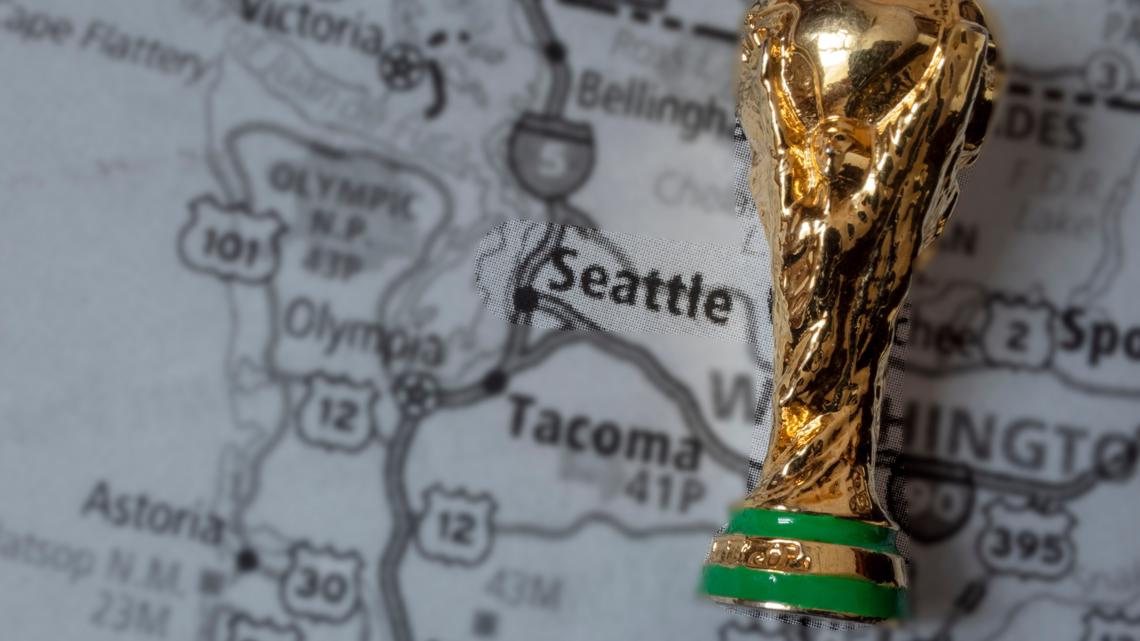
An estimated 750,000 people are expected to visit Seattle during the tournament, which runs locally from June 11 through July 19.

SEATTLE — Seattle officials are warning residents to prepare for major transportation changes, street closures and packed transit systems as the city gears up to host six FIFA World Cup matches this summer.
An estimated 750,000 people are expected to visit Seattle during the tournament, which runs locally from June 11 through July 19. Matches at Lumen Field, temporarily renamed “Seattle Stadium” during the event, include a June 19 matchup between the United States and Australia along with two knockout-round games in July.
With the tournament expected to transform downtown Seattle for nearly a month, agencies across the region are now detailing how they plan to move fans around the city while managing security and congestion in some of Seattle’s busiest neighborhoods.
Match schedule
Seattle’s six World Cup matches are scheduled for:
- June 15: Belgium vs. Egypt
- June 19: United States vs. Australia
- June 24: Qatar vs. TBD
- June 26: Egypt vs. Iran
- July 1: Round of 32
- July 6: Round of 16
Free fan zones planned across Seattle
Outside the matches themselves, Seattle organizers are also preparing multiple free fan zones across the city.
Public viewing and event spaces are planned at:
- Seattle Center
- Waterfront Park
- Pacific Place
- Victory Hall in SoDo
Seattle Center plans include large viewing screens, DJs, cultural programming and family-friendly activities throughout the tournament.
Transit agencies planning extra service
Much of Seattle’s transportation strategy centers around transit.
Sound Transit plans to increase Link light rail service on match days, with 1 Line and 2 Line trains running every eight minutes until 1 a.m. Additional Sounder trains and postgame ST Express service are also planned, alongside overnight service between downtown Seattle and Seattle-Tacoma International Airport beginning in March.
King County Metro says it plans to add extra trips on multiple routes throughout the tournament and operate a shuttle between Seattle Center and Lumen Field before and after matches.
The city also plans expanded transit priority measures, including 24/7 bus lanes on corridors like Aurora Avenue and Rainier Avenue, upgraded transit stops and new downtown wayfinding signage.
Additional West Seattle Water Taxi sailings and a seasonal waterfront shuttle are also planned during the tournament.
Expect major street closures downtown
Officials are strongly encouraging fans not to drive.
City planning documents describe three impact zones spanning the stadium district, downtown Seattle and the broader Puget Sound region. Officials expect heavier traffic, crowded transit systems and large volumes of pedestrians, bicycles and scooters moving through neighborhoods near the stadium.
Street closures around the stadium are expected to begin roughly four hours before kickoff and continue for several hours after matches end. Parking restrictions in parts of Pioneer Square will begin at 2 a.m. on game days.
The city also plans to convert large sections of Pioneer Square into pedestrian-focused areas during matches, creating expanded gathering spaces around the stadium. Bike and scooter traffic entering the area will be slowed to 8 mph.
Seattle leaders have already unveiled two new free public restrooms in Pioneer Square, part of a broader effort to address long-standing sanitation concerns downtown before next month’s FIFA World Cup crowds arrive.
The bathrooms, operated by a company called Throne, are located near Occidental Square and are designed to provide public access while limiting vandalism and misuse, challenges that plagued Seattle’s past public restroom projects.
Pike Place Market and waterfront changes already underway
A similar crowd-management strategy is already beginning to take shape near Pike Place Market, where officials recently installed new concrete planters and movable barriers designed to limit vehicle access ahead of what organizers expect will be one of the busiest summers in the market’s history.
Officials say the market will operate under different traffic modes depending on crowd levels and time of day, with streets periodically closed to vehicles during peak activity.
Visitors will also see updated signage, street attendants and additional public seating around the market.
Meanwhile, organizers plan to build a floating soccer pitch and fan viewing area on a barge near Pier 62 as part of broader waterfront fan activations.
Construction projects will pause during tournament
Seattle also plans to temporarily halt construction projects in key public areas during the tournament.
The construction pause will run from June 8 through July 7, with contractors required to clear equipment, steel plates and temporary barriers from city-managed streets and sidewalks before matches begin.
Officials say the goal is to reduce congestion and keep streets and sidewalks accessible during the event.
Security footprint around stadium expected to grow
Around the stadium itself, organizers are planning temporary security barriers, expanded emergency exits and increased staffing levels as part of a broader crowd-control strategy.
Planning documents call for nine sets of emergency and egress gates on the west side of the stadium, along with additional crowd-control staff and security personnel operating from four hours before kickoff until three hours after matches end.
Former Seattle Police Chief John Diaz said fans should expect to see police officers, private security, volunteers and World Cup ambassadors throughout the stadium area.
The federal government uses the Special Event Assessment Rating (SEAR) to assess the risk level. The rating decides the level of federal support. The World Cup is rated SEAR 2. By comparison – the Super Bowl is SEAR 1. Diaz said a SEAR 2 rating is “still extremely high” and those ratings can change and be elevated.
Ticket prices in question
Ticket resale prices for Seattle matches are reportedly falling.
According to pricing data cited by The Seattle Times, the cost of admission in Seattle has fallen 26% over the last 30 days.
The lowest-priced tickets currently available for the United States vs. Australia match on June 19 are roughly $906.
The average get-in price across all games was $449 at the time this story was published, offset by relatively lower ticket prices for the Qatar – Bosnia and Herzegovina match on June 24 and Egypt – Iran on June 26.

To ensure diverse coverage and expert insight across a wide range of topics, our publication features contributions from multiple staff writers with varied areas of expertise.
