
King County officials say a surge in unlicensed food carts is being driven by multi-state networks skirting licensing rules and possibly exploiting workers.

SEATTLE — King County officials say a dramatic surge in unpermitted hot dog vendors near Seattle sports venues is the work of centrally organized, multistate networks deliberately evading licensing requirements and potentially exploiting workers — findings that emerged from an eight-month KING 5 investigation.
Health inspectors with Public Health- Seattle and King County observed a pattern of large-scale operators without local ties bypassing health, cleanliness, and safety standards, putting the public at risk. Dr. Eyob Mazengia, an official with the agency, described the scope of the problem.
“These are centrally organized operations that have owners orchestrating this body of work from somewhere else,” Mazengia said.
The surge, which began roughly a year ago, has dealt a severe blow to law-abiding street food businesses near Lumen Field, T-Mobile Park and Climate Pledge Arena. Namoka Trice, who owns Deez Dogs with her sister, Betty, said she has lost 75% of her typical sales since the surge began.
“We might sell 300 to 400 hot dogs on a regular night six months ago. Now, we’re under 100 here,” Trice said.
Another licensed vendor, Farshid Varamini of Pioneer Grill Hot Dogs, said he is down 50%. He said the operations appear to be coordinated from out of state.
“They’re vans with California plates that are coming up and unloading these carts,” Varamini said, expressing frustration at those behind the scheme, or in his words, “whoever it is that’s bringing these people and making money off of it illegally.”
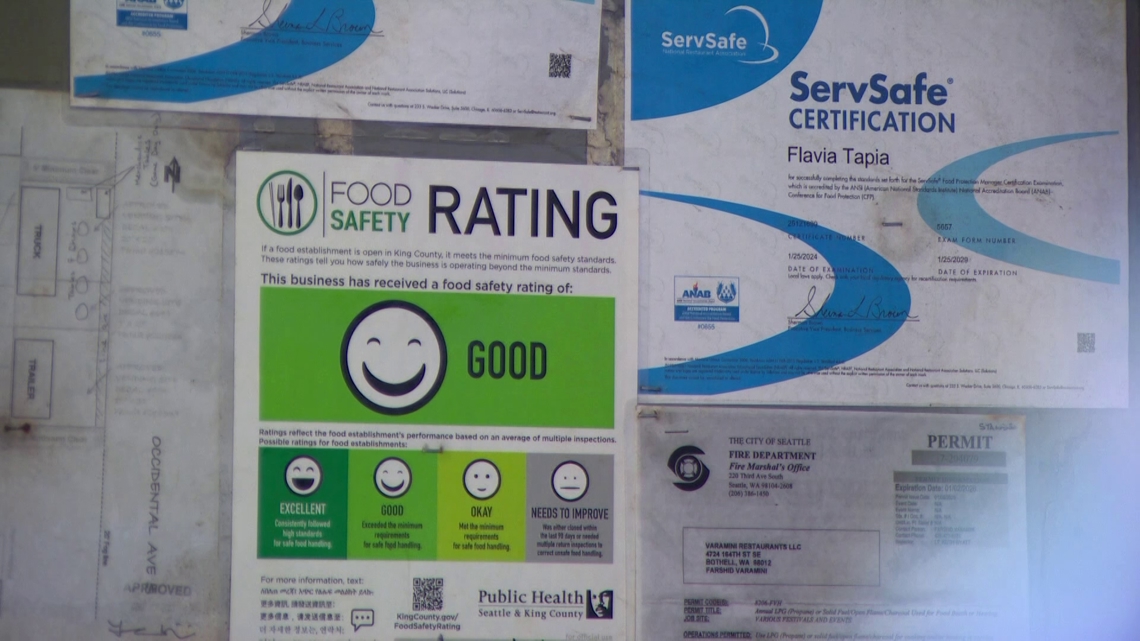
During the investigation, a KING 5 reporter approached a vendor outside a Mariners game who was not displaying the required health rating sign. When asked who he worked for, the vendor said he did not speak English.
King County Councilmember Teresa Mosqueda said she has been reviewing complaints about unlicensed vendors and that evidence suggests some workers may be victims of coerced labor.
“We do see a network of, potentially, individuals who are being coerced by an operator or an owner who is not actually out there selling food themselves,” she said.
Mosqueda added: “I think by making sure that anybody who is coercing labor is being held accountable, that actually does support the worker in the end, because we get them out of an unjust and illegal situation, frankly.”
Licensed vendors say the issue extends beyond lost revenue; it is also a matter of civic responsibility. Trice said customers spending money at unpermitted carts may unknowingly be funding exploitation.
“The money you’re giving them pays nothing into your kids’ schooling. It doesn’t pay into your sidewalk. And you’re also — you might be exploiting somebody,” Trice said.
KING 5 reached out to the Washington State Department of Labor & Industries to ask whether it is investigating the labor exploitation concerns, but did not receive a response by the time of publication.

To ensure diverse coverage and expert insight across a wide range of topics, our publication features contributions from multiple staff writers with varied areas of expertise.
