
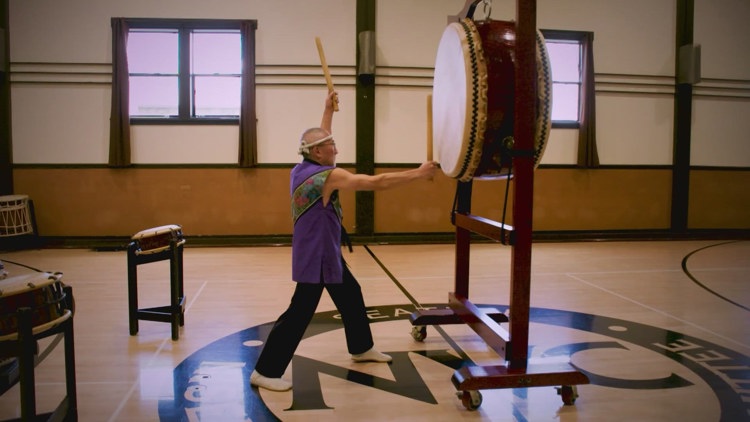
Local performers in Seattle highlight taiko drumming as a powerful symbol of cultural resilience, identity, and solidarity.

SEATTLE — Taiko drumming, described by local performers and community members as more than a traditional Japanese art form—it is also a message of cultural resilience and resistance.
“Taiko is actually a form of culture, cultural resistance and resilience,” said Stanley Shikuma.
Shikuma, a Sansei and senior member of Seattle Cocon Taiko and leader of the Kazi Taiko Youth Group, has been involved in taiko since moving to Seattle in 1981. He explained that taiko is a Japanese word for drum and a tradition that has been used for thousands of years in Japan.
“Taiko has been used for 1000s of years in Japan,” he said, adding that modern taiko performance in the United States traces back to groups such as the San Francisco Taiko Dojo, founded in 1968 by Seiichi Tanaka.
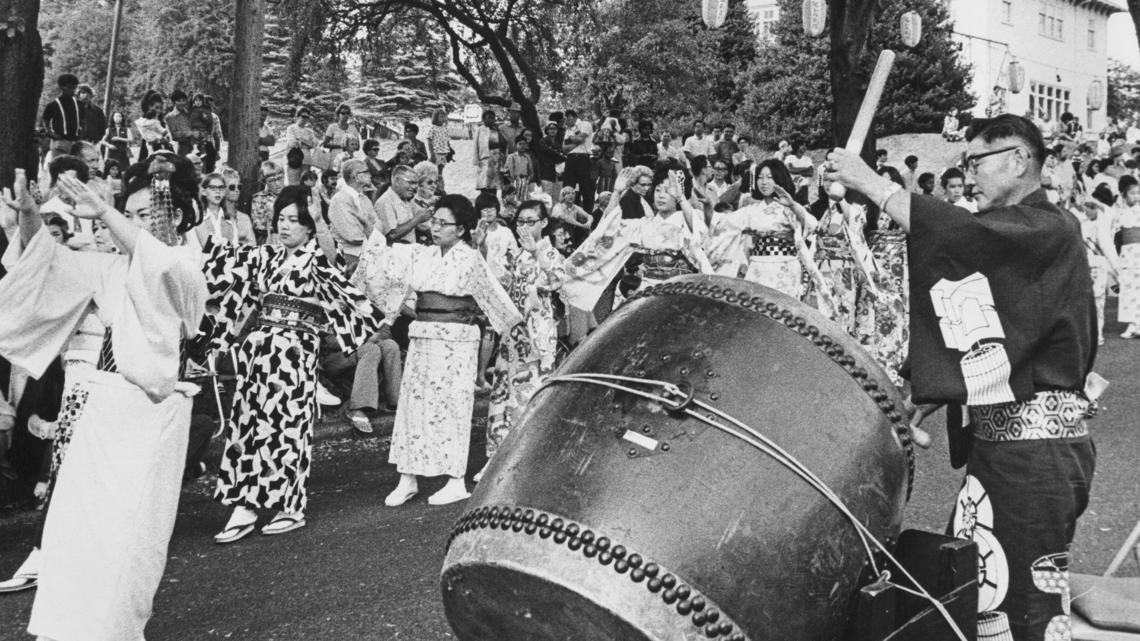
In Seattle, he said, taiko grew after early performances such as Onda Koza at the Cherry Blossom Festival inspired local groups to form.
Beyond performance, Shikuma said taiko represents identity and connection.
“So taiko is more than just performance. Taiko can be a personal journey of identity and exploration of what it means to be Japanese American. It’s also a way of connecting with people and connecting with other communities,” he said.
Another performer, Jonathan Narita, described taiko as both expressive and unifying.
“Taiko is loud. Taiko is powerful… we’re trying to bring us together with everybody who’s struggling,” Narita said.
Shikuma also reflected on how historical trauma shapes the present for many Japanese American families. He noted that his own family was incarcerated during World War II, with relatives sent to camps, including Tule Lake in Northern California. He said those experiences were rarely discussed in his household, but left lasting impacts.
“Growing up, my family hardly talked about the experience at all… it was actually a very traumatic; it was clearly a life-changing experience for everybody,” he said.
Narita shared similar family history, saying relatives were also incarcerated at Minidoka and in Santa Fe. He connected that history to present-day immigration issues and enforcement actions.
He said seeing family separations, “breaks my heart, it infuriates me, because how could we still have these things happening in our country?”
Shikuma said he sees parallels between historical policies and current immigration debates, pointing to what he described as the “vilification of an entire people” based on identity rather than actions.
“Today we see in the immigration policies… a lot of the same things that happen to Japanese Americans,” he said.
Both men said AAPI Heritage Month should include reflection on ongoing challenges as well as celebration.
“What we ought to be looking at is, ‘What are the problems and threats that we continue to face?’,” Shikuma said. “We need to be talking about all of those issues, not just the so-called good things.”
A major part of their work has taken place outside the Northwest Detention Center in Tacoma, where Shikuma has participated in sound rallies since 2019. He said taiko’s sound can carry in powerful ways.
“We know that taiko can travel through prison walls,” he said.
Narita said performances outside detention facilities are meant to show support for those inside.
“It was a way of letting them know that they weren’t alone, because they could hear us in there,” he said.
Shikuma added that the goal is to offer hope and connection.
“It gave them hope to know that they weren’t forgotten, that they weren’t isolated,” he said.
He said the work is rooted in solidarity and historical memory.
“Solidarity is all we have. All we have is each other,” Narita said, while Shikuma added, “Nobody came to help the Japanese Americans during World War II. So we’re trying to help other people.”
Despite the difficult history, Shikuma said taiko remains a source of strength.
“Taiko helps keep me going in difficult times,” he said, adding that it also allows people to “express yourself and to appear in public to make a statement.”
He emphasized that cultural expression remains vital, especially in times of fear.
“It’s still important for communities to come out and celebrate their culture,” Shikuma said. “We should not be forgotten.”
Special thanks to:
- Miranda Chen
- Brandon Uttech
[ Archival Photo Credits]
MOHAI, Seattle Post-Intelligencer Collection, 2000.107.098.19.01, photo by Robert H. Miller
MOHAI, Seattle Post-Intelligencer Collection, 2000.107.098.19.04, photo by Robert H. Miller
MOHAI, Kurt E. Armbruster Collection, 2014.43.2.2.MUSIC433

To ensure diverse coverage and expert insight across a wide range of topics, our publication features contributions from multiple staff writers with varied areas of expertise.
