
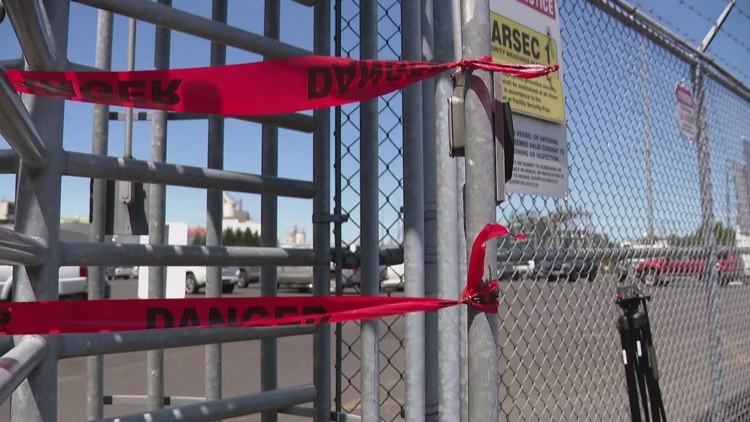
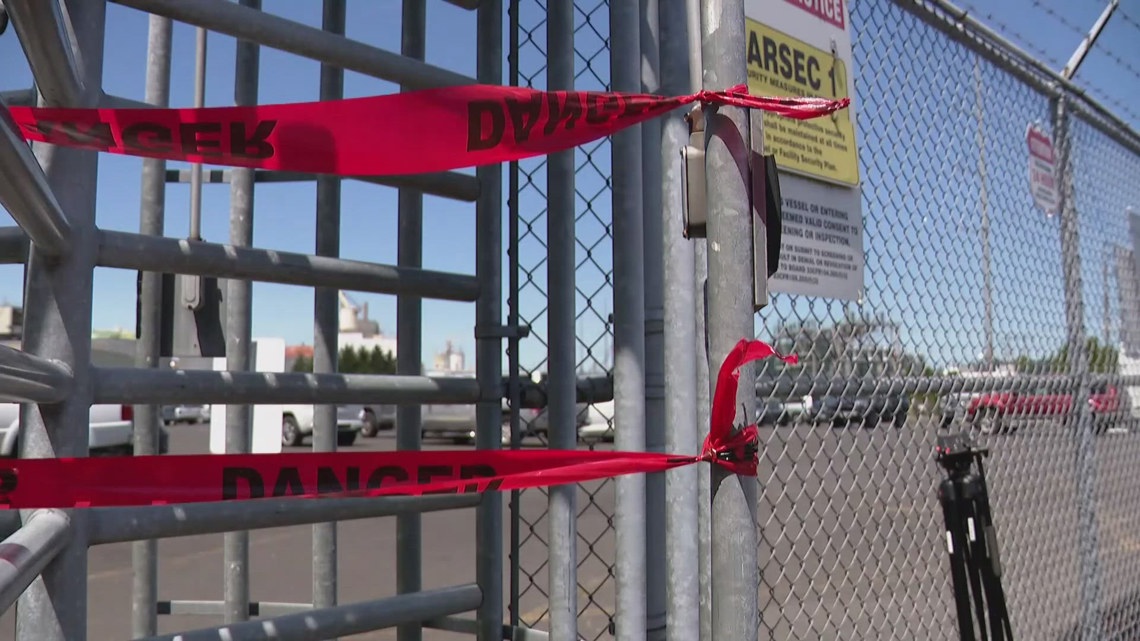
Following a deadly implosion at Nippon Dynawave paper mill, emergency crews work to flush corrosive water from Longview.

LONGVIEW, Wash. — Emergency crews are continuing to work Thursday to flush contaminated water through Longview’s ditch system following the deadly implosion at the Nippon Dynawave paper mill.
Officials said water affected by the release of corrosive white liquor is being moved away from residential areas and the city’s drinking water supply before being diluted and discharged into the Columbia River. The operation is being overseen by the U.S. Environmental Protection Agency (EPA) and the Washington Department of Ecology.
Brooks Stanfield, the federal onsite coordinator with the EPA, said crews deployed air monitors both on and off the site amid concerns about possible hydrogen sulfide exposure. Stanfield said monitors have not detected any air contaminants so far, but the EPA plans to continue monitoring air quality for the foreseeable future.
“I can report to you we’ve been monitoring 24 hours a day since we arrived here. And not only have we not seen any exceedances of health criteria, but we have not actually had a detection of hydrogen sulfide or any of the other air contaminants we might have encountered. So that’s really good news,” said Stanfield.
Officials are pumping water from the Cowlitz River and Highlands neighborhood fire hydrants into the ditch system while operating the Reynolds Pumping Station, which empties into the Columbia River.
Stanfield said elevated pH levels were first detected in the ditch Tuesday and have since migrated through the system.
Officials began flushing the water Wednesday because the ditch sits above an aquifer that supplies drinking water to residents.
“It is indeed safe to drink, and they’re monitoring it very diligently, but it’s something that we don’t want to risk. So we’re taking this threat seriously and pushing this water to the west,” Stanfield said.
Two discharge pumps are moving the elevated pH water into the Columbia River, with one measuring a pH of 7 and the other 8.5. Officials said they want to keep levels below 9 and have additional strategies prepared if levels rise further. The baseline pH level of the Columbia River is 7.
Stanfield said the elevated pH levels could pose a concern for wildlife, including fish, but the water remains safe for people to swim in and there are currently no public alerts.
Residents are urged to avoid ditches and dikes near Washington Way and Prudential Boulevard because of possible contamination.
Gov. Bob Ferguson said crews had removed about a dozen dead carp from a nearby dike.
The industrial accident happened around 7:15 a.m. Tuesday during a shift change at the mill, according to Scott Goldstein, fire chief for Cowlitz Fire and Rescue. The implosion damaged administrative offices, a break room and operational areas inside the facility.
Seven workers are confirmed dead and two are still missing.
Officials initially believed the tank contained about 900,000 gallons of white liquor, a highly corrosive substance used in the paper-making process, but later revised the estimate to roughly 600,000 gallons. Authorities also reduced the estimated amount remaining in the tank from 90,000 gallons to about 25,000 gallons.

To ensure diverse coverage and expert insight across a wide range of topics, our publication features contributions from multiple staff writers with varied areas of expertise.
