
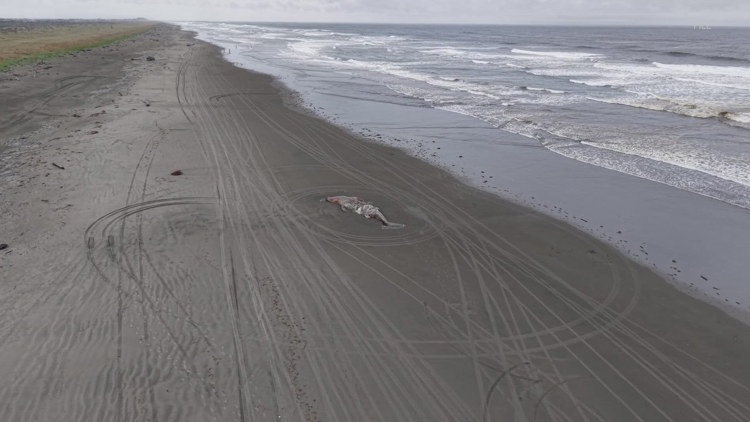
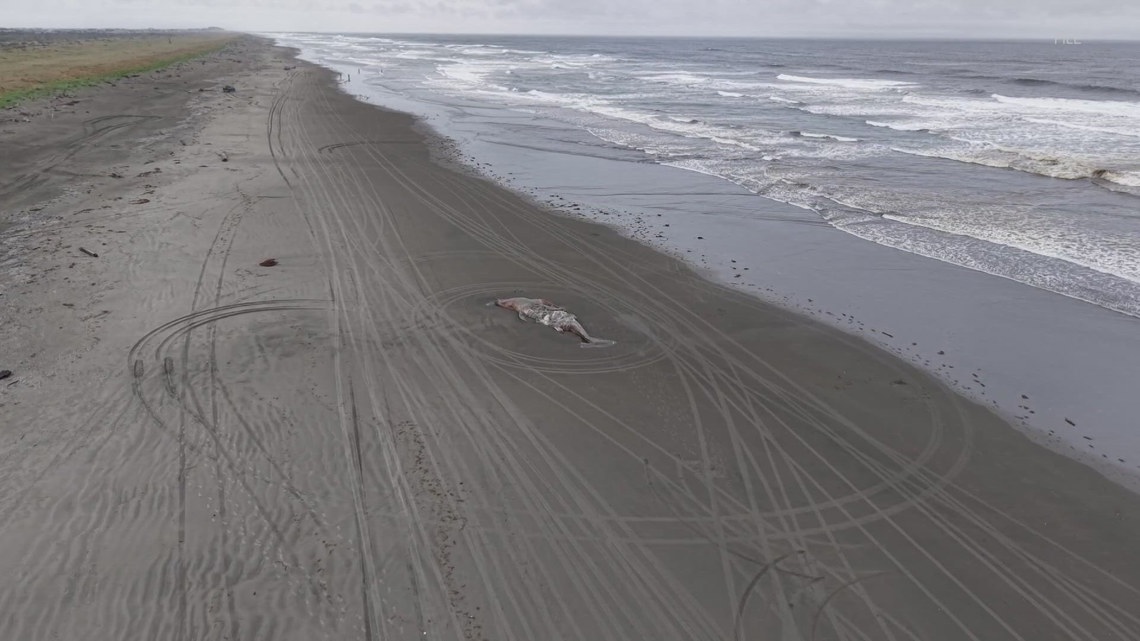
Gray whale deaths are growing along Washington’s coast as Arctic ecosystem changes disrupt food supply.

SEATTLE — Gray whale deaths are rising along Washington’s coast, and researchers say the increase in strandings may reflect worsening changes in the Arctic ecosystem.
John Calambokitis, a founder and research biologist with the Cascadia Research Collective, said researchers have documented 21 dead gray whales in Washington state so far this year, already among the highest totals on record.
“We’ve been seeing record numbers of gray whales washing up dead, what we call a stranding,” Calambokitis said. “We’re up to 21 so far this year, just in Washington state and only gray whales.”
The previous record was set in 2019, when 35 gray whale strandings were reported statewide. However, Calambokitis said the number of deaths recorded at this point in the year already exceeds what researchers saw at the same time during that record-setting year.
Researchers estimate the gray whale population may now be roughly half the size it was a decade ago. Low calf birth rates and several consecutive years of elevated deaths are adding to concerns about the species’ future.
Calambokitis said many of the whales found dead appear severely malnourished. Gray whales typically fast while migrating from breeding grounds in Mexico to feeding areas in the Arctic, but researchers said many are no longer finding enough food to survive the journey.
Researchers believe the root of the problem lies in the Arctic, where climate-driven ecosystem changes are altering the whales’ primary feeding grounds.
“The Arctic is an area that’s seen these pretty dramatic ecosystem shifts over the last 20 to 30 years with climate change,” Calambokitis said. “There used to be abundant prey, and now there’s much less prey.”
As food becomes harder to find, gray whales are increasingly venturing into unusual locations in search of feeding grounds. Some have entered bays, rivers and heavily trafficked waterways, where they face additional dangers, including vessel strikes and entanglement in fishing gear.
Calambokitis said researchers have also observed some whales finding alternative feeding areas, including a group known as the “Sounders” that feeds in Puget Sound. Those whales appear to be faring better than the larger Arctic-feeding population.
Still, the long-term outlook remains uncertain.
“Unfortunately, the future is uncertain,” Calambokitis said. “We don’t understand all the mechanisms and processes involved yet.”
Researchers are encouraging the public to report stranded whales and avoid getting too close to them. Calambokitis said people should keep their distance, keep pets away and notify local authorities or NOAA’s marine mammal stranding hotline if they encounter a whale onshore.
Scientists said each report helps researchers gather critical information, including signs of disease, ship strikes, entanglement and environmental contaminants.

To ensure diverse coverage and expert insight across a wide range of topics, our publication features contributions from multiple staff writers with varied areas of expertise.
