
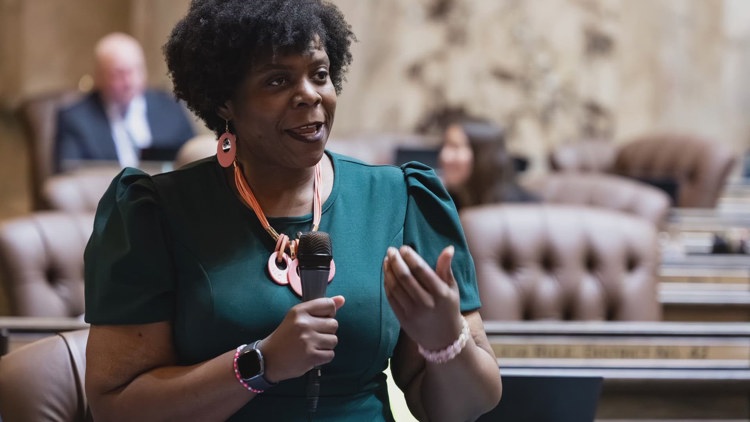
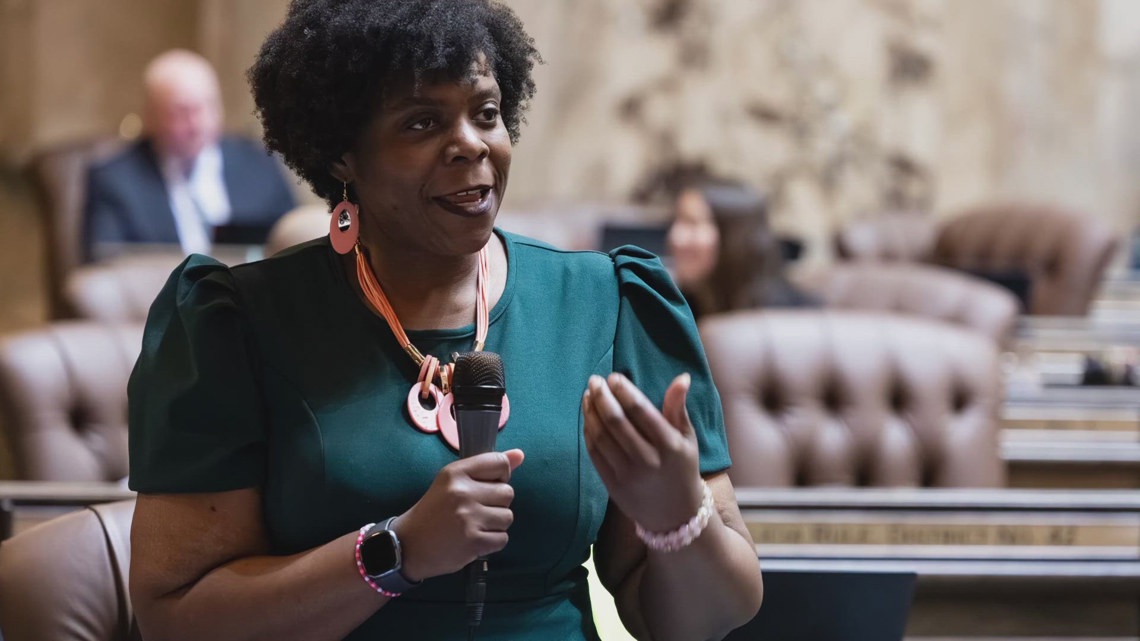
Washington Rep. Jamila Taylor recounts surviving a stroke and urges anyone at risk to pay attention.

SEATTLE — Older adults are typically at higher risk for stroke, but doctors are warning that younger people who are at risk can be just as vulnerable to the cardiovascular condition.
A Washington state lawmaker learned this the hard way, and hopes her story will raise awareness about stroke risk.
Washington Rep. Jamila Taylor has served her district in Federal Way since 2021. She called the 2025 legislative year particularly contentious.
“I was dealing with policy that was getting the attention of the federal government,” Taylor said.
But this isn’t a story about politics. It’s her story of surviving a stroke at the young age of 49.
“I was like, well, how is this possible? I mean, I survived a very ugly session, very tough situations. I, you know what, I need to stay alive to help my mom and my brother. How can I be the one to be in the hospital right now?” Taylor said.
In addition to her lawmaker duties, Taylor was caring for her ailing mother and twin brother who were on dialysis, and her father, who was battling lung cancer. Taylor was herself recovering from fibroid surgery the year prior.
“I wasn’t paying attention to everything as well as I could have with my own body,” she said.
Knowing the stress was getting to her, she engaged in therapy. Then, in May 2025, as Taylor was getting ready for a therapy session, something was not right.
“It was kind of like when you wake up and you’ve slept on your arm wrong and you’re like, oh, it’s tingling and you can’t, you know, really feel it. And so you’re like, okay, let me shake it up and get the blood flowing. But it seemed like the blood never woke up my hand,” Taylor said.
She told her therapist to call 911, and medical attention soon arrived. Doctors later told her she was having a hemorrhagic stroke.
“I was dumbfounded. What, what, what? No, no. And then they said, we need to get you to a specialist immediately,” Taylor said.
“A hemorrhagic stroke is a bleeding stroke,” said Joshua Snavely, stroke program chair for Virginia Mason Franciscan Health, who treated Taylor during her recovery.
Snavely explains, hemorrhagic strokes are linked to high blood pressure, and adding any stress on top of that could increase risk, even among people as young as their 30s and 40s.
“These stressors just add up over time. And if you’re not paying attention to your health, if you’re not paying attention to the numbers, you know, if you’re not seeing your healthcare provider regularly, these things just accumulate until a breaking point happens,” Snavely said.
Stroke killed about 3,300 adults in Washington state in 2024, according to the most recent-available data from the Centers for Disease Control and Prevention.
For Taylor, she was glad she caught her stroke early — an experience that was frightening and eye-opening. She also realized she was doing too much.
“I was scared to ask for help in many ways in terms of caregiving. I thought I could do it all, but I really wasn’t doing it well. And I wasn’t, you know, treating myself well,” Taylor said.
Her message to others moving forward: “Pay attention and it’s okay to stop what you’re doing. Ask for help, go to the doctor, go to the emergency room, get it checked out.”
So how can you tell if you’re having a stroke?
Doctors have developed the acronym, “BE FAST” to help recognize the signs:
- B is for Balance
- E is for Eyes, like a change in vision
- F is for Face drooping
- A is for Arm weakness or numbness
- S is for Speech difficulty
- T is for Time to call 911
If you notice any of these symptoms, don’t wait for it to go away and call 911 immediately.

To ensure diverse coverage and expert insight across a wide range of topics, our publication features contributions from multiple staff writers with varied areas of expertise.
