
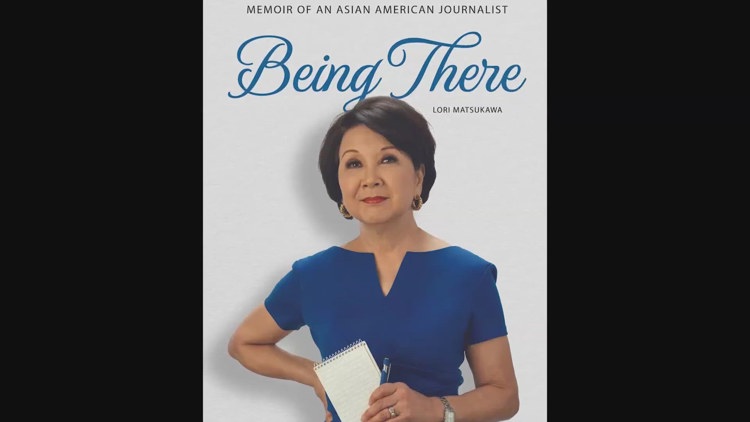
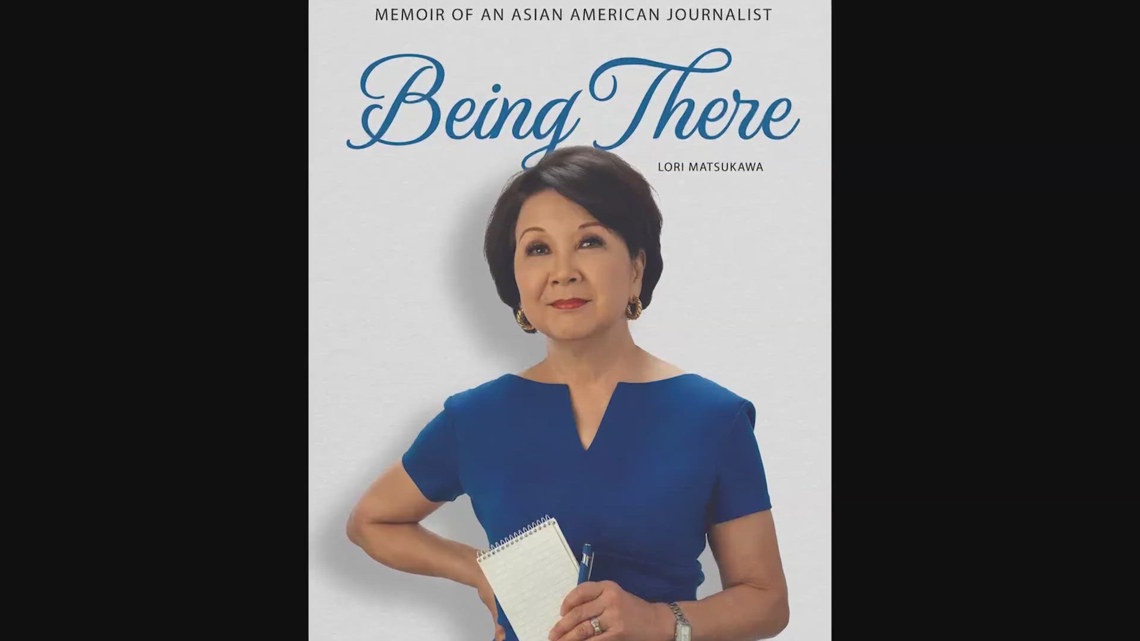
“Being There: Memoir of an Asian American Journalist” traces Lori Matsukawa’s path to Seattle, where she was a KING 5 reporter and anchor for nearly 40 years.

SEATTLE — A KING 5 legend is storytelling once again, but this time, she is sharing a look into her past and what it took to make it as an Asian American journalist.
“Being There: Memoir of an Asian American Journalist” traces Lori Matsukawa’s path from Hawaii to the Pacific Northwest, where she was a KING 5 reporter and anchor for nearly 40 years. Matsukawa retired in 2019.
“It’s called memoir but it’s really not about me. It’s not my story; it’s our story,” she said. “I had to put down on paper what this last few decades has been and meant to so many of us.”
From typewriters and payphones to a world of digital journalism and satellite TV, Matsukawa said Asian American journalists remain an underrepresented group. That was especially so when she got her start.
Calling it a fairly “white man’s world” when she arrived in Seattle in the early 1980s, over the years, “we did make a difference.”
A native of Hawaii, Matsukawa got her start as an intern at KPIX in San Francisco while attending Stanford University. After graduating Matsukawa worked at stations in Redding, Calif. and Portland, Ore. before moving up to Seattle to work at KOMO. One of her first assignments was covering the 1980 eruption of Mount St. Helen’s. Three years later, she made the switch to KING 5.
“I had to put on paper what I went through. It was our history, but through my eyes. It was just a wonder to see how the community changed,” she said.
To Matsukawa, “being there” highlights the importance — and the difference it makes — when you are present in a moment, to tell a story and in someone’s life.
During her 40-year career at KING 5, Matsukawa traveled the world: Covering former Washington Gov. Gary Locke’s visit to China, reporting on the primary election in New Hampshire, going to the Olympic Games, and much more.
“All of a sudden, I was doing network-type work, but I didn’t have to leave my home [station],” she said. “It was wonderful.”
Matsukawa credits kind and generous people throughout her life who have offered encouragement and opportunities, but she said, there’s no way she could repay them.
“The only thing I can do is pay it forward,” she said. “We’re showing our gratitude by encouraging the next generation.”
Matsukawa played a key role in developing a chapter of the Asian American Journalists Association. She said it’s important for Asian American journalists to offer scholarships to young journalists of color, be mentors, bring them to job fairs and “pull each other up from market to market.”
One thing she hopes young journalists take away from her new memoir is that they are lucky to live in an era with a thriving Asian American Journalists Association. She encourages young journalists to take advantage of opportunities and “make us proud.”

To ensure diverse coverage and expert insight across a wide range of topics, our publication features contributions from multiple staff writers with varied areas of expertise.
