
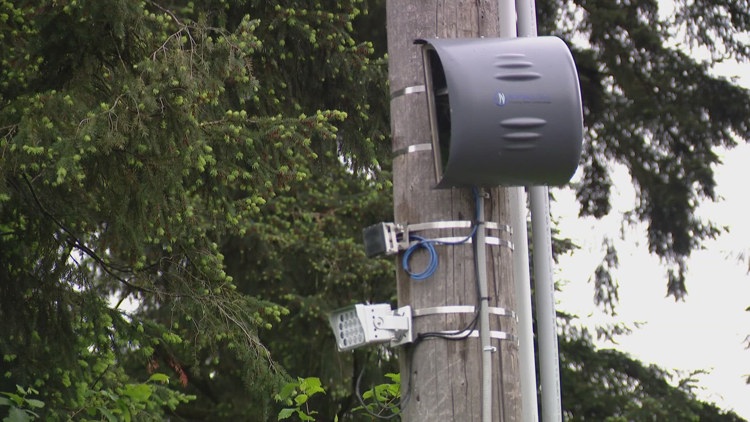
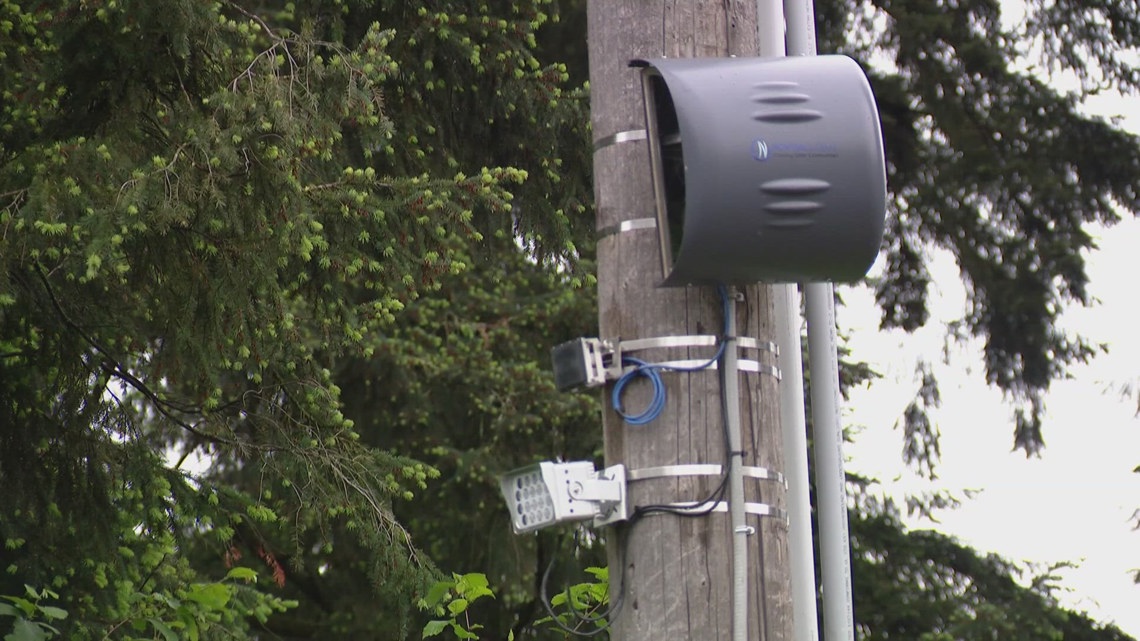
A new traffic camera program in Milton has raised thousands and stirred debate, as city leaders argue it is improving safety, but drivers remains frustrated.

MILTON, Wash. — A new traffic camera program in the city of Milton has generated more than $800,000 in revenue in less than a year, fueling frustration among some drivers while city leaders argue the system is already changing behavior and improving safety.
The automated cameras went live in early October, initially issuing warnings before transitioning to citations in November. The enforcement program now covers several stretches along Milton Way, including near Lake Middle School and the intersection at 28th Street.
According to the Milton Police Department, the system generated $803,582.50 through 14,909 citations during its first eight months.
At Wild Roots Hair Company in Milton, the cameras have become a regular topic of conversation among customers and employees.
“It’s almost on a daily I hear people talking about those stinking cameras up there,” said Leah Steacker, a commuter who drives into Milton for work.
Sabbatha Elmstedt, who works at the salon, said many customers say they have already received citations.
“We probably have two or three clients a day that come in and say they’ve gotten a ticket or say they’ve been cited,” Elmstedt said.
The tickets begin at $115. Steacker said she was surprised after receiving a citation herself.
“I wasn’t going that much over,” Steacker said. “A cop would not pull me over for what I got a ticket for…42 in a 35.”
Milton Police Chief Tony Hernandez pushed back on that claim, saying officers in the city routinely stop drivers traveling more than six miles per hour over the posted limit.
“Well, that’s not an accurate statement because we would pull you over in this city if you’re going over 6 miles over the posted speed limit,” Hernandez said.
Hernandez said the city implemented the camera system in response to longstanding concerns about speeding through Milton, particularly from drivers cutting through the city on the way to other destinations.
“And so that’s been one of the things that as a city we’ve been trying to deal with is to discourage or get people to obey the speed limits as they come through the city trying to get to another location,” Hernandez said.
The chief said citation data indicates many of the violations are being committed by drivers who do not live in Milton.
“What we’re seeing in the numbers is we’re able to determine where these individuals live that are coming through,” Hernandez said. “And so by the registration of the vehicle we know that there are people from outside the city that are transiting through here that are receiving most of the infractions.”
Under Washington law, revenue collected from automated traffic enforcement cameras must be placed into a dedicated fund and used only for traffic and pedestrian safety improvements.
Elmstedt said many residents want to see visible improvements tied to the growing amount of money collected through the program.
“More so, where is the money going to go from the traffic infractions so we can see it be utilized,” Elmstedt said. “If we saw some improvements in the city with that money I don’t think the residents would be quite as upset with it.”
Hernandez said the city is considering several safety-focused projects, including engineering upgrades, bike routes and other traffic-calming measures.
The police department also emphasized that Milton’s traffic cameras are not comparable to Flock-style camera systems or real-time crime center technology used in some larger cities. Officials said the cameras only capture still images and short video clips associated with violations and are not connected to each other, meaning they cannot track vehicles moving through town.
Police said every citation must also be reviewed and approved by a sworn officer before a ticket is issued.
Despite the criticism, city officials say they are waiting for a longer data sample before determining whether the program is successful.
Police plan to conduct a more detailed review in November, one year after citations officially began, to analyze whether speeding and dangerous driving behaviors have declined in the areas where the cameras were installed.

To ensure diverse coverage and expert insight across a wide range of topics, our publication features contributions from multiple staff writers with varied areas of expertise.
