
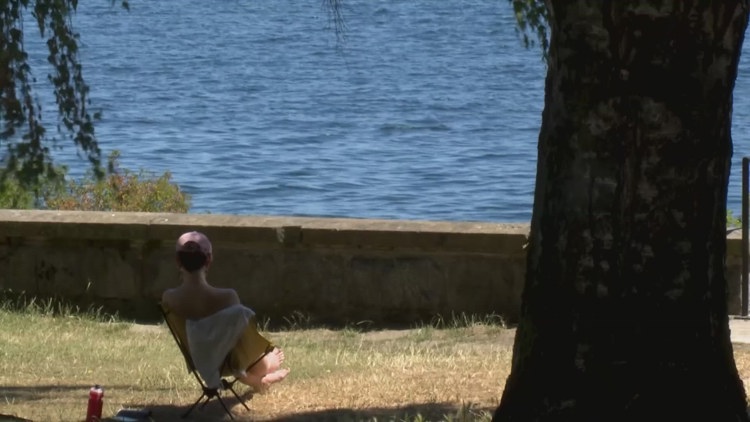
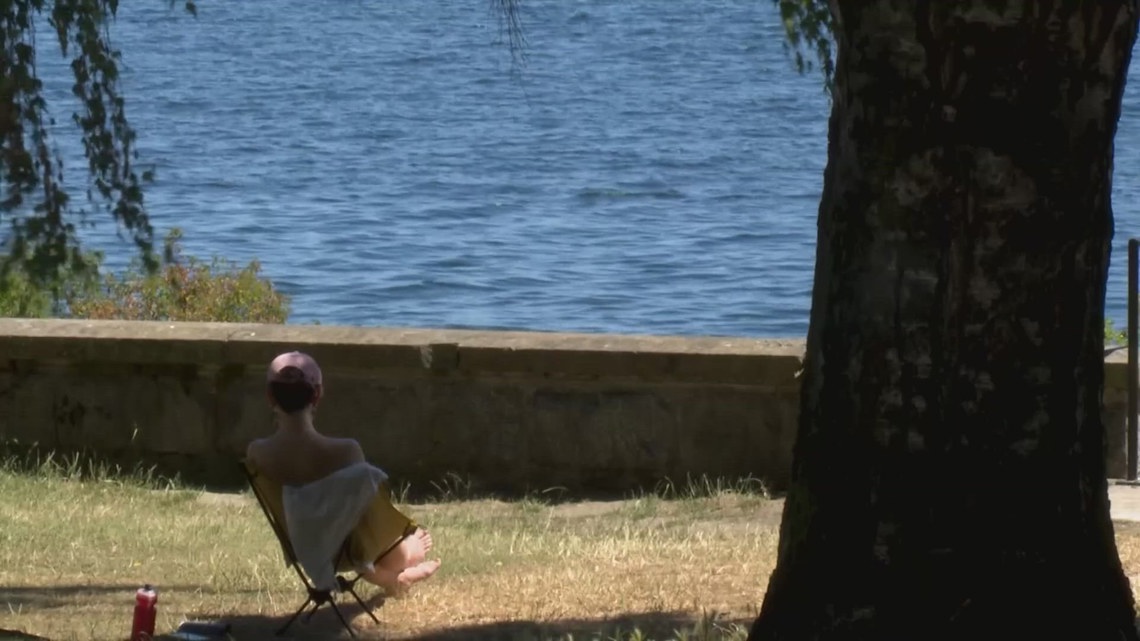
In April, Friends of Denny Blaine filed a motion asking the court to confirm that toplessness is allowed at the beach.

SEATTLE — Being topless in areas where clothing is required at Denny Blaine Park is not prohibited, a judge confirmed Friday.
In April, Friends of Denny Blaine filed a motion asking the court to confirm that toplessness is allowed at the beach, after the group alleged parkgoers were told by private security guards to cover up. The judge’s confirmation was made as an ongoing lawsuit over the park’s use continues through the court system.
Prior to the judge weighing in, Seattle Parks and Rec told KING 5 tops are not mandated in the clothing-required area.
“The point is straightforward. Denny Blaine Park is not private property,” a statement from Friends of Denny Blaine reads, in part. “It is a public beach, a historic queer gathering space, and a place where no one should have to wonder whether a neighbor’s security guard will decide their body is a problem. With today’s ruling, parkgoers can again enjoy the toplessness that has defined this beach for decades, free from intimidation by private security.”
Denny Blaine is a well-known nude beach and LGBTQ+ community hub. However, a lawsuit filed in April states that, about a decade ago, the park began being used by people from outside the neighborhood for nudity and, more recently, for “sexual acts such as masturbation and other forms of public sex.” Nudity is not illegal in Washington, but there is a law against indecent exposure, a misdemeanor where there must be lewd or obscene behavior, according to Seattle police.
The lawsuit, filed by the group Denny Blaine Park for All, called for the city to enforce its own Code of Conduct and dedicate resources to restore safety to the park.
Judge Samuel Chung found public nudity at the park to constitute a “public nuisance” in his ruling on a preliminary injunction in July of 2025. Chung is the same judge who confirmed toplessness is not prohibited in areas where clothing is required.
After the judge’s initial ruling, the City of Seattle was required to come up with a plan of abatement to address issues raised by Denny Blaine Park for All, which included creating a clothing-option area.
In a statement, Denny Blaine Park for All said it does not oppose the judge’s motion that confirms toplessness is allowed because “it has no impact on the trial, its outcome, or current conditions at the park.
“It deals with a random issue tied to the city’s temporary plan before the trial. In short, it’s not relevant,” the group said in a prepared statement.

To ensure diverse coverage and expert insight across a wide range of topics, our publication features contributions from multiple staff writers with varied areas of expertise.
