
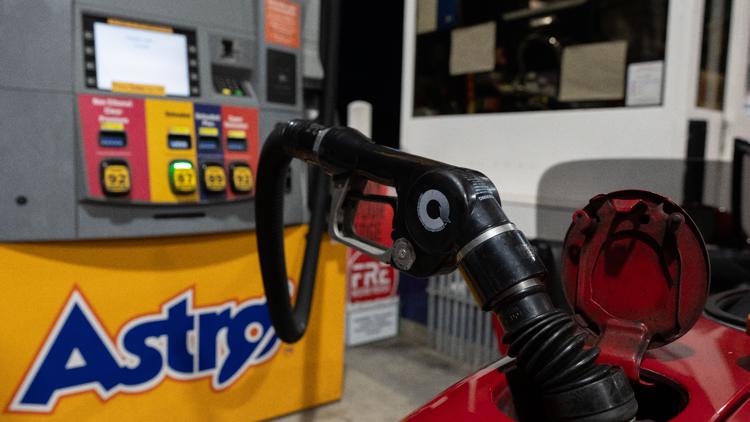
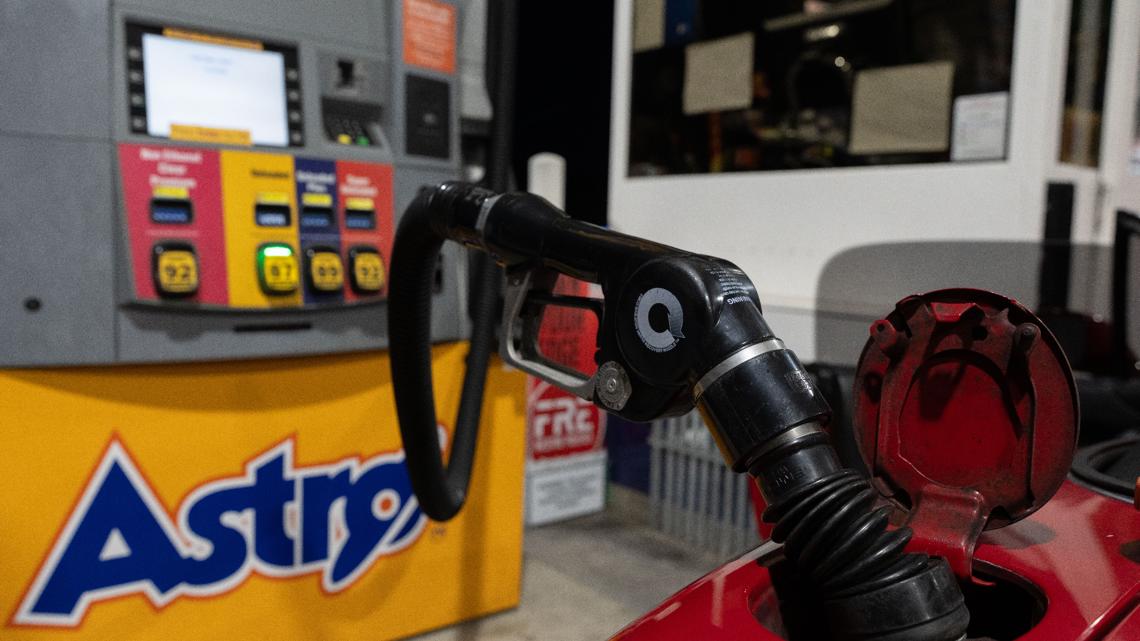
Gas prices remain high in Washington state. A well-known automotive expert said the way you drive could be costing you as much as the price of fuel itself.

SEATTLE — It’s not just the price tag at the pump draining your wallet.
With AAA reporting an average of $5.61 a gallon in Washington as of Friday, May 1, a well-known automotive expert said the way you drive could be costing you as much as the price of fuel itself.
Tom Voelk, an automotive writer, New York Times contributor, independent car reviewer, and former KING 5 journalist, said the biggest factor in what you’re spending on gas isn’t what the sign at the station says — it’s what happens once you pull out of it.
KING 5 hit the road with Voelk, heading out of Seattle’s SODO neighborhood and onto the freeway to break down the habits quietly emptying your tank.
You can always search for the lowest local gas prices with KING 5’s link.
Slow down and watch savings add up
The first lesson may creep up on you fast. Your speed matters — a lot.
“Generally the accepted figure is at 50 mph you start losing efficiency,” Voelk said. “It’s kind of the gold standard. Every five miles over that, you start losing, and it can be considerable. Once you hit 75 mph, your efficiency is down by say 25%.”
That’s a quarter of your fuel economy — gone — at a speed that’s commonly driven on Seattle-area freeways.
The fix is simpler than you might think. Voelk recommends using your cruise control. Smooth, steady driving lets the car work efficiently instead of fighting constant surges and sudden braking.
“You’re surging and you’re braking — it’s hard on your brakes, and you’re using extra energy to move forward,” Voelk explained.
The shape of your vehicle works against you — but you can help it
Physics doesn’t care what you drive, but it does penalize some vehicles more than others.
SUVs and trucks, with their “tall and boxy” profiles, catch significantly more wind resistance than lower-set sedans — and Voelk explained that drag burns real fuel.
Keeping your car properly tuned and not carrying unnecessary weight are also easy wins. Weight is one of the quietest fuel economy thieves on the road.
Do you need premium at the pump?
As of May 1, the average price of a regular gallon of gas is $5.61 in Washington. The average price for premium is about $6.10 per gallon.
One of the biggest money-saving tips Voelk shared was about what you’re actually pumping into your tank.
“If it says that premium fuel is ‘recommended,’ then you can switch to regular gas,” he said. “That can save what, 50 cents a gallon?”
The key words, he stressed, are recommended versus required.
If your owner’s manual says premium is required, don’t skip it. But he said millions of drivers are potentially paying for premium they don’t need.
Keep your roof clear
Back at the KING 5 station garage, Voelk flagged one more fuel economy killer hiding in plain sight — and it’s become a fixture on Pacific Northwest roads.
“It’s kind of fashionable to have things on your roof like big cargo boxes, trays, or rooftop tents, but if you’re not using them, take them off,” he said. “They cause so much aerodynamic drag. It can really drop your fuel economy more than just about anything.”
Small changes, real savings
Voelk’s final tips go beyond the car itself.
There are other routes to consider when trying to save money.
If it’s possible, carpooling, using transit, and walking short distances like a quick trip to a nearby grocery store can all make a meaningful dent in monthly fuel costs.
One last piece of advice that hits close to home for many commuters: stop treating your car like a storage unit.
If you’re hauling around gear, extra clothing or outerwear, sports equipment, or bags you don’t need on your daily commute, clearing them out could save you more than you’d expect.
In the market for a new car? Consider an EV or hybrid
“There is a demand issue for hybrids, and I just talked to the CEO of Hyundai, and he says that they’ve seen a surge in electric vehicle sales because of high gas prices,” Voelk siad. “Typically, it doesn’t make sense to go out and buy a new vehicle just to get better fuel economy, but if you’re going to be replacing your vehicle, then it does make sense.”
If you’re looking into buying an electric vehicle (EV) in the coming months, Voelk said there are some deals to take advantage of.
“The real bargain is ‘used,’ because a lot of them are coming off three-year leases and for some reason the resale value of EVs is not all that great. So you can oftentimes get…say a $60,000 EV easily for $30,000,” Voelk said.
An EV will save you more than just fueling up at the pump.
“Remember, there are no oil changes needed. There’s no transmission service needed. And the brakes tend to last longer on EVs because you’re using regenerative braking, not the physical disc brakes,” Voelk said. “There’s a lot less to go wrong with an EV, so you can buy with confidence.”
Long term, Voelk said an EV will save you money on maintenance and gas costs.
“You’re also saving time. You’re not going to the gas station because for the best EV experience, you really need to be able to charge where you sleep, right at home,” Voelk said. “It’s a lot less expensive, it’s also a lot more convenient.”
To see more of Voelk’s recent and posts and automotive reviews, click here. You can also look at the “Driven” shop smarter tool here.

To ensure diverse coverage and expert insight across a wide range of topics, our publication features contributions from multiple staff writers with varied areas of expertise.
