
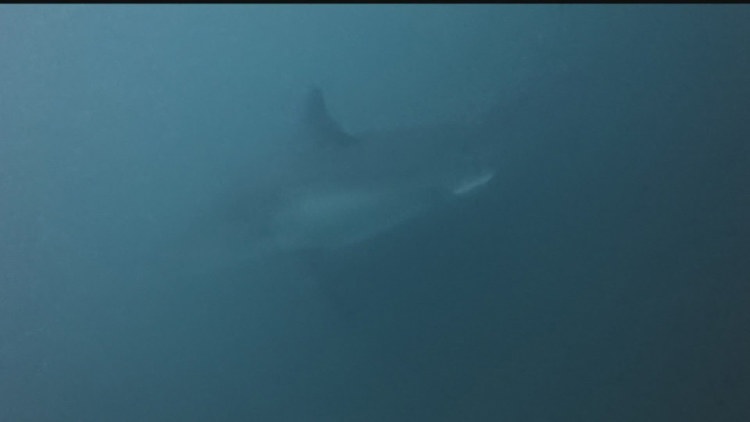
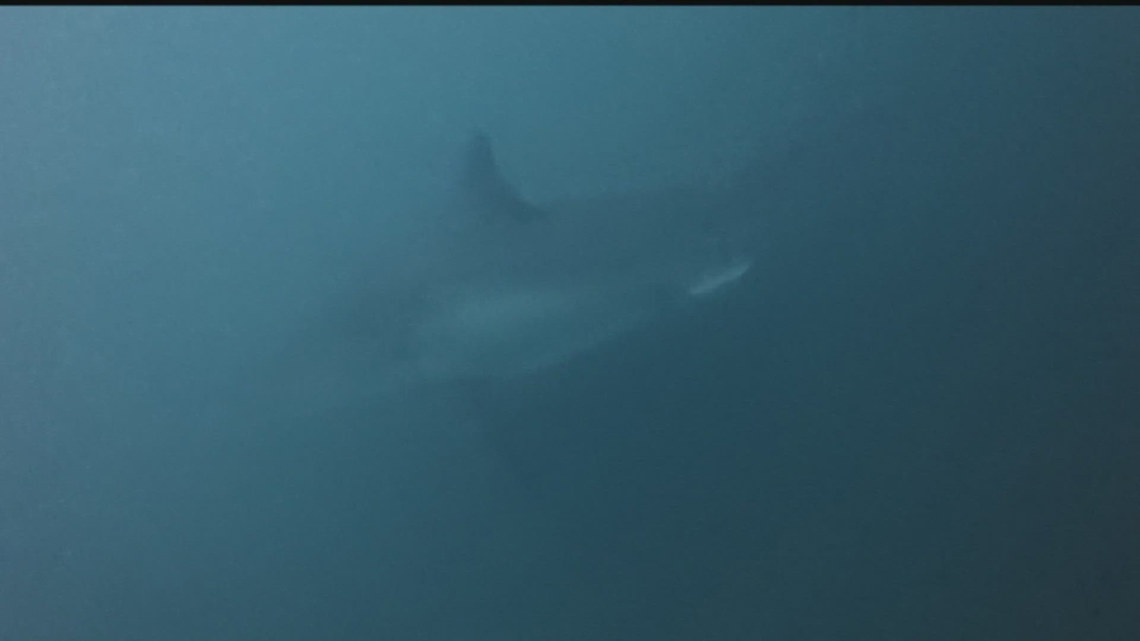
Kara, a mature female great white shark, was detected near Ocean Shores during an unusual trip through Pacific waters.

OCEAN SHORES, Wash. — A satellite-tagged mature female great white shark named Kara was detected just offshore from Ocean Shores in March and as of last week was just off the coast of Vancouver Island, according to tracking information shared by Dr. Michael Domeier on Instagram.
Dr. Michael Domeier is the president and executive director of MarineCSI and a shark researcher.
Kara is estimated to be nearly 5 meters long and has drawn attention because of her unusual movement through the Northeast Pacific.
She was tracked off Vancouver Island on March 10, which stood out because no other shark in that dataset had been recorded that far north, according to the post.
Kara then turned south, pinged off San Francisco on March 22, moved back toward Northern California, went quiet for a time and later returned to Pacific Northwest waters.
Researchers are watching Kara’s path because it does not match the movement patterns scientists have documented over the past 30 years, according to the post.
Dr. Domeier noted that based on what scientists previously understood, a shark like Kara would likely be halfway to Hawaii by now. Instead, she has remained closer to the West Coast and returned to Northwest waters.
Because Kara is a large, mature female, researchers say she could be pregnant, though that has not been confirmed.
If she is, her movement could help scientists better understand where great white sharks gestate or give birth.
MarineCSI says long-term tracking is especially important for female great white sharks because they can have a two- to three-year migration cycle.
The group says the more researchers learn about the sharks’ movement, the better they can understand areas tied to mating, pupping and nursery grounds.
The SPOT tags used by Dr. Domeier and other researchers are designed to track adult white sharks for four to six years. MarineCSI says the tags can only send signals to satellites when a shark swims at the surface.
Researchers say that means each ping offers only part of the picture. The gaps between detections are also part of the mystery, showing how much remains unknown about where these sharks travel and why.

To ensure diverse coverage and expert insight across a wide range of topics, our publication features contributions from multiple staff writers with varied areas of expertise.
