

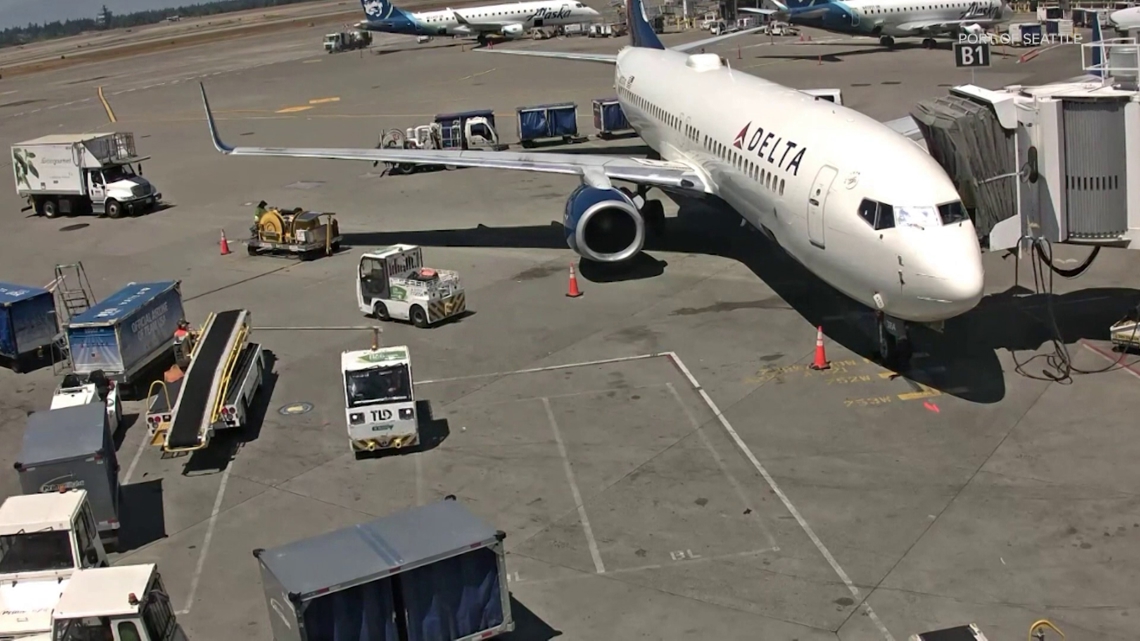
The lawsuit follows similar cases involving severe injuries; Port of Seattle denies liability and any wrongdoing.

SEATTLE — A ramp worker at Seattle-Tacoma International Airport has filed a lawsuit claiming unsafe conditions on the tarmac led to a crash involving a baggage tug that left him with long-term injuries.
Marcus Creary, 27, said he was struck while working near a Delta Air Lines gate on July 9, 2024, as crews rushed to clear space for an arriving flight. Creary, who works for Delta, said the ramp area near Gate B1 was congested with vehicles and equipment as he directed workers to move out of the way.
“There was a lot of traffic coming in, there was clutter at the gate, and we needed to clear that up for a safe environment,” Creary said.
According to a Port of Seattle incident report, a baggage tug pulling a cart came around another vehicle, and Creary “stepped back into the cart,” suffering bruising. No citation was issued.
A Port spokesperson said incident reports are created by airport operations staff to track risks and safety follow-ups and that supervisors have discretion over whether to issue citations. The spokesperson said firefighters responded to assess Creary, who declined further medical transport and went home with ice. The Port said both workers were reminded to be aware of their surroundings.
Creary said he was struck while working to clear the area and now suffers from chronic nerve damage, including complex regional pain syndrome, or CRPS.
“I’m limited in playing with my children. I’m limited in work. I’m now at full duty, but what’s difficult is trying to manage the symptoms such as pins and needles, pain while walking, pain while lifting on a constant basis,” Creary said. “My leg never wakes up.”
Doctors have recommended a spinal cord implant to help manage the pain — a device Creary said he may rely on for the rest of his life and would have to turn off while driving because the electrical stimulation it produces could be a distraction.
The lawsuit names the Port of Seattle, PrimeFlight Aviation Services Inc., Swissport USA Inc. and Swissport Fueling Inc. as defendants. It alleges multiple safety failures, including a vehicle improperly parked in the aircraft gate area, congestion from unauthorized equipment and a baggage tug driver failing to maintain a safe distance, keep a proper lookout and yield to a worker on foot.
Creary said he noticed a Swissport vehicle parked in the gate area before the crash and told a worker to move it.
“Hey, you need to leave,” Creary recalled telling the person, who he said responded they would move the vehicle in 10 minutes because they had another aircraft at the gate to handle.
Attorney Raymond Bishop, who represents Creary, has represented other injured workers.
In a previous case, Bishop represented ramp worker Tia Valentine, who was injured in 2022 when she was thrown from a baggage tug during a sharp turn. The tug’s wheel ran over and crushed her right leg. That case ended in a multimillion-dollar settlement. Public records show a portion of that settlement, about $2.175 million, was tied to the Port of Seattle, though documents indicate payment came through an insurer and the Port denied liability.
Another worker, Alyah Payne, lost part of her leg in a 2021 tug collision and later received an $11 million settlement.
Port of Seattle safety documents, provided by Bishop, outline strict rules for vehicle operation, including prohibitions on blocking aircraft areas and requirements to maintain safe distances and avoid unsafe driving. The lawsuit alleges those rules were violated.
“These injuries are not small. They’re catastrophic,” Bishop said.
The Port of Seattle says it does not own or operate baggage tugs or ramp equipment, and that safety is a shared responsibility between airlines and their contractors, who operate most ground service vehicles.
In a statement, the Port said safety is its top priority and that all ramp personnel are trained on their responsibilities. The agency said it uses inspections, citations and equipment checks to monitor compliance, issuing hundreds of citations and identifying hundreds of equipment issues each year.

To ensure diverse coverage and expert insight across a wide range of topics, our publication features contributions from multiple staff writers with varied areas of expertise.
