
After 16 years inside Melrose Market, Rain Shadow Meats will shut its doors in December. Its owner says the relationships built across the counter won’t stay behind.

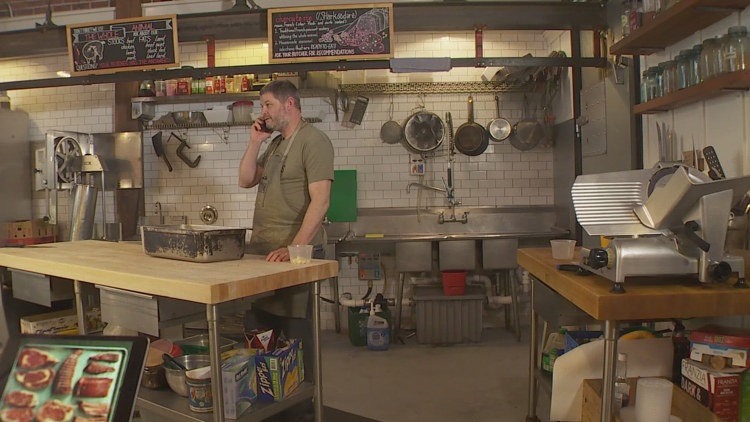
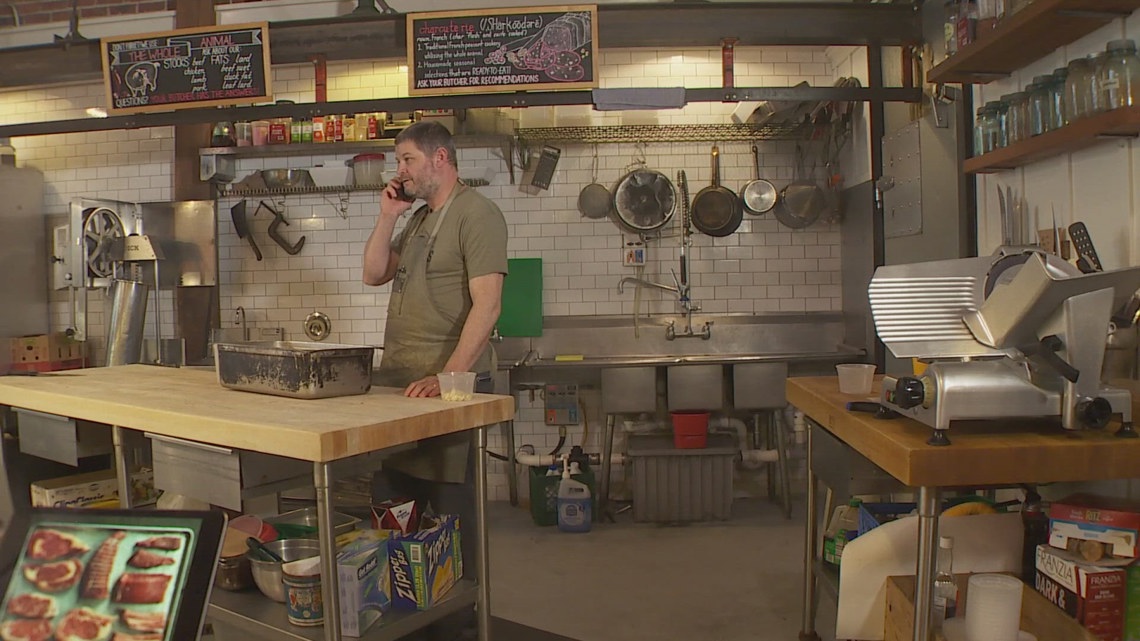
SEATTLE — The phone rings, and Russell Flint answers the same way he has for years: “Rain Shadow Meats.”
For more than a decade, that voice has been a constant inside Melrose Market on Capitol Hill — a place where customers don’t just buy dinner, but linger, ask questions, swap stories. A place where a butcher knows names, remembers weekends, and asks about job interviews.
By December, that will end.
Rain Shadow Meats — the only butcher shop on Capitol Hill — is closing after its lease was not renewed, according to Flint. In a social media post on Sunday, he shared the news with his loyal customers. Flint told KING 5 the building’s owner told him the shop was “no longer a good fit” as the market moves in a different direction.
KING 5 has reached out to the building’s owner for comment but has not yet heard back.
“It was hard,” Flint said. “A lot harder than I expected.”
He had spent months trying to negotiate a longer-term lease. For a time, he said, conversations went quiet. When he finally got an answer, it was final.
“Yeah, it was pretty devastating,” he said.
Inside the shop, though, little looks different.
Orders are still weighed and wrapped in parchment paper. Garlic is crushed on the counter. Customers drift in and out, some for the first time, others for what they now realize could be the last.
“To me it’s the community,” he said. “It’s my customers I get to have face-to-face conversations with every day, every week.”
Over the years, those conversations have turned into something more.
“They know all about my life, I know all about their lives,” he said.
When Flint shared the news online, that community responded.
Reading through the comments, he said he found messages from customers who said they had learned how to cook from him, that they would follow wherever the shop goes next, that they would miss not just the products, but the experience.
“I’m going to miss my customers,” he said.
The closure also reflects a broader shift in the neighborhood.
Flint described a Capitol Hill that once felt tightly connected, a cluster of small, independent food businesses that opened together, collaborated and built something collectively. Over time, he said, that sense of community has thinned.
“It has slowly just dwindled down,” he said.
He worries about what comes next, not just for his shop, but for small businesses more broadly.
“What you’re going to end up with is just the big corporate grocery store chains and big national brands,” he said.
Still, Flint is not walking away. He is already searching for a new location, hoping to reopen the shop somewhere north of the Ship Canal Bridge.
“I’m looking really earnestly to move the shop,” he said.
And in the meantime, the work continues — orders filled, conversations had, goodbyes said one by one.
The shop is closing. The relationships are not. And for now, at least, they are still happening across a counter that won’t be there much longer.

To ensure diverse coverage and expert insight across a wide range of topics, our publication features contributions from multiple staff writers with varied areas of expertise.
