
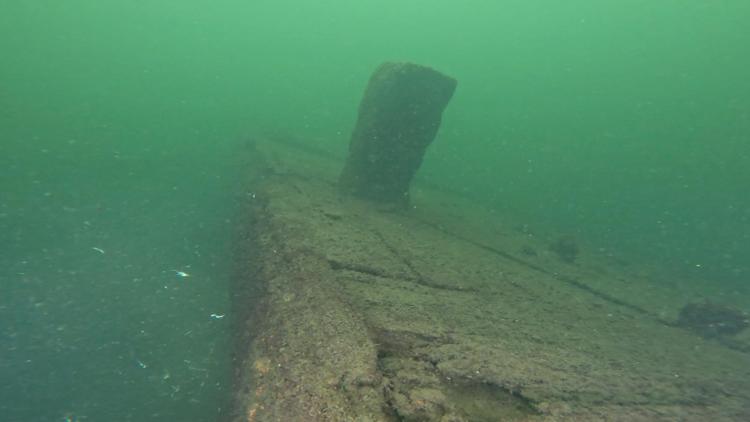
A robotics specialist documents shipwrecks under Lake Union, waters too polluted and dangerous for divers; historians say that exploration is only just beginning.

SEATTLE — Beneath the waters of Lake Union lie dozens of shipwrecks, and modern robotics technology is allowing for their improved imaging and documentation.
A high-resolution sonar survey conducted in recent years identified nearly 100 “targets” on the lakebed, including barges, work boats, sailboats and other debris.
Ocean engineer and remotely operated vehicle, or ROV, specialist Phil Parisi said roughly half of those targets are believed to be shipwrecks. The true number has never been confirmed, but historians tell KING 5 that 50 vessels is within the assumed range of derelict watercraft at the bottom of Lake Union.
Not all of the wrecks have been explored by divers, Parisi said, and sonar mapping provides only a top-down, non-optical view based on acoustic reflections.
Over the past year, Parisi has begun documenting wrecks he believes are under-researched.
“We need to document what these wrecks look like today,” Parisi told KING 5.
Parisi said he has explored seven wrecks so far, including one that did not reportedly appear on the original sonar map, and plans to continue the work as he gains access to more sites.
While historical photos exist from before many vessels sank, modern imagery is limited.
“Going in and filling in those blanks of what these really are — you can put the picture together of what is actually down there,” Parisi said. “What is it made of? What does it look like?”
Parisi said previous work by diver Dan Warter and DCS Films documented roughly two dozen wrecks over the past decade, but significant gaps remain between what has been mapped and what has been visually recorded.
“It’s crazy that there’s so much down there,” Parisi said. “It’s shocking to me. I was stunned. Looking at these maps — it’s shipwreck city.”
Parisi said ROV technology allows him to explore Lake Union without entering potentially polluted water and provides longer dive times and more precise navigation in low-visibility conditions.
“It’s kind of a ghost town down there. There is a harsh lack of life,” Parisi said.
He said plant life drops off beyond about 25 feet, where light no longer supports photosynthesis, leaving much of the lakebed barren.
“It drops out, and then there is nothing,” Parisi said. “You hear stories of pollution, Gas Works runoff. That’s why diving isn’t really allowed. It’s not a healthy ecosystem. That has been the weirdest thing.”
Parisi recently documented four wrecks near Gas Works Park, including a large barge, a landing craft, a smaller unidentified vessel, and the Irene.
The barge, identified as the Foss 54, measures roughly 100 feet long and 30 feet wide; it was built in 1908 and used until 1969, according to the Lake Union Virtual Museum, which started as a UW thesis project and is partnered with the Center for Wooden Boats, according to its website.
Another wreck, a wooden vessel that he was not able to identify, sits in shallow water and measures about 40 feet long and 11 to 12 feet wide.
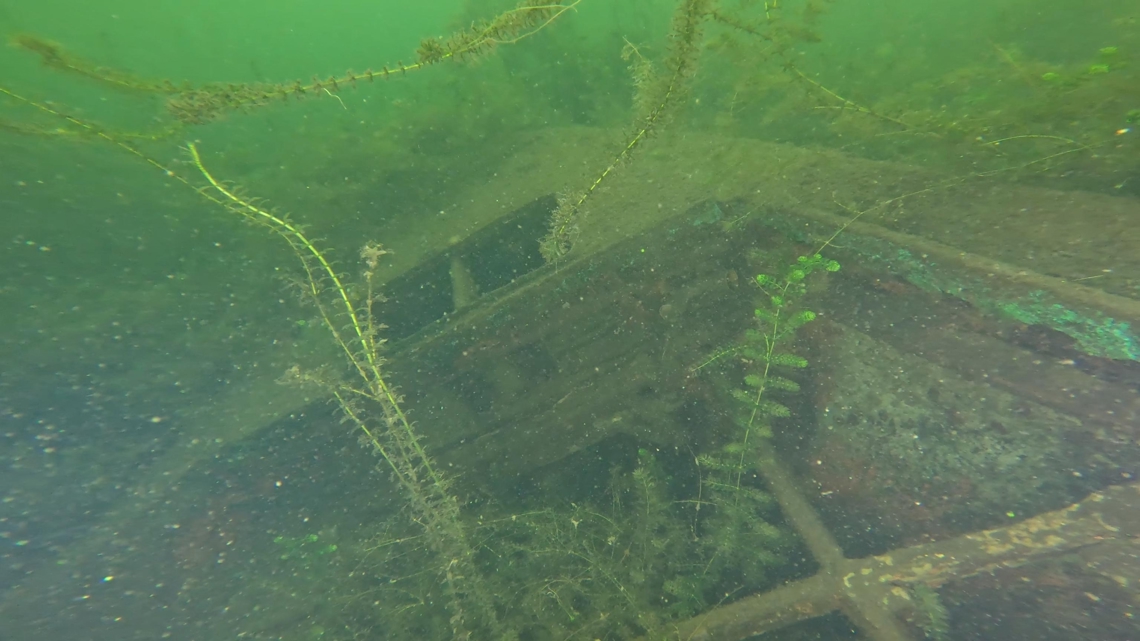
A third wreck, identified as a converted landing craft, was found in deeper water and appears to have industrial or military origins based on its structure.
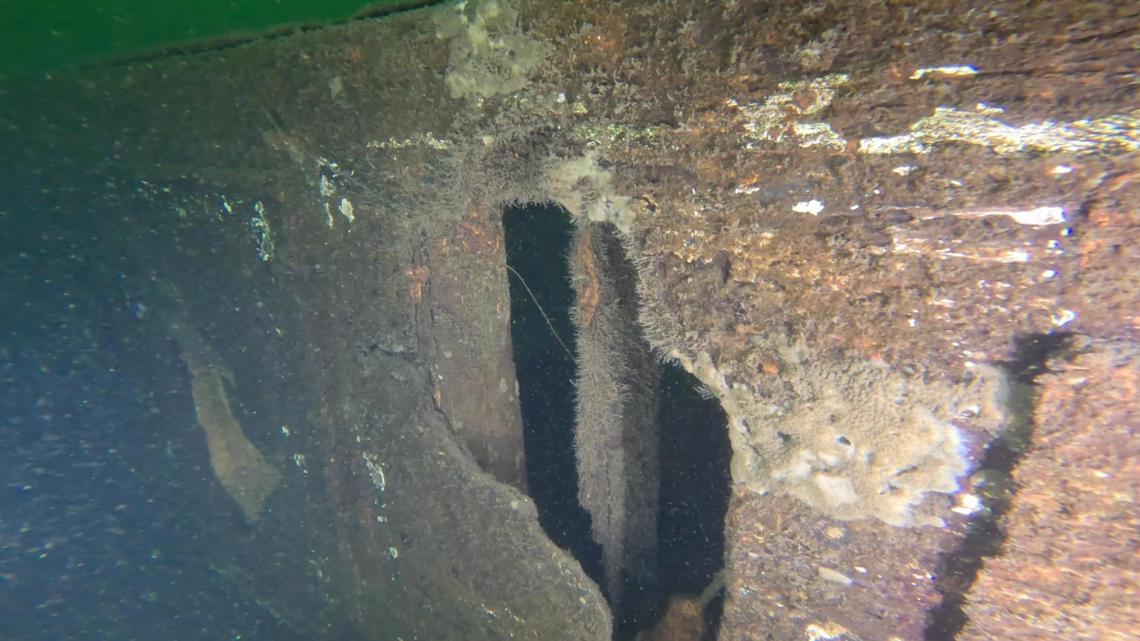
A fourth vessel, the Irene, is made of wood and spans roughly 50 feet along its length.
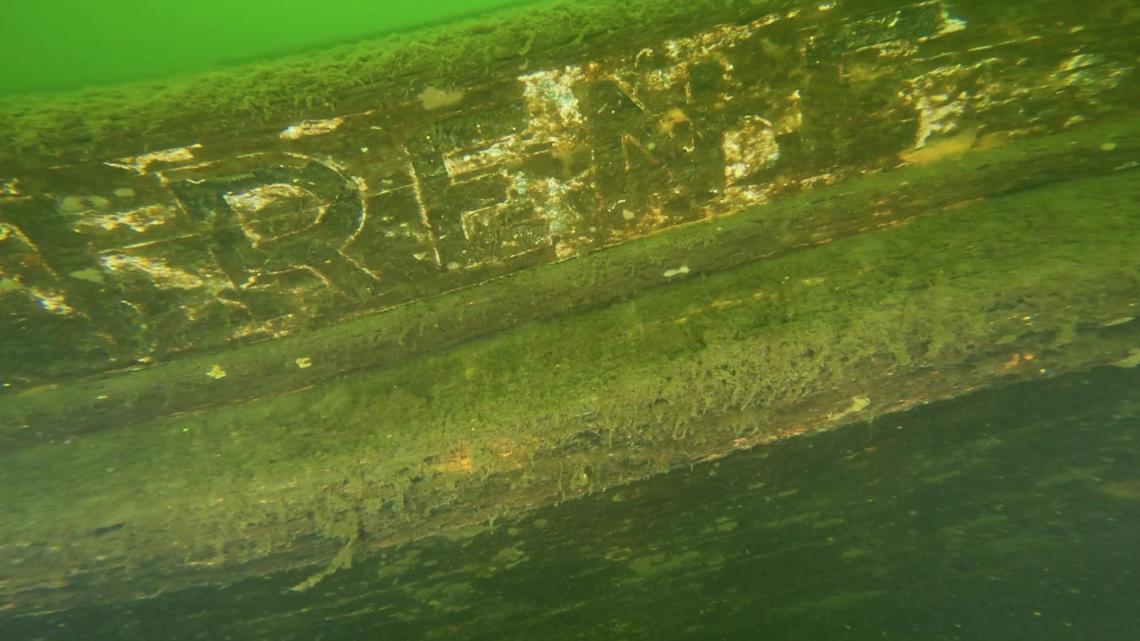
Parisi said he is working to cross-reference sonar data, historical records and existing footage to identify which wrecks have not yet been visually documented.
He said the large number of wrecks is likely tied in part to abandoned or neglected vessels that were allowed to sink, sometimes intentionally due to the high cost of disposal. Historians confirmed with KING 5 that many of the ships were indeed deliberately scuttled, often after salvageable hardware had been removed. The lack of valuables among the wrecks is part of the reason Lake Union’s historical shipwrecks have not been more thoroughly explored, until now.
Instead of valuables, Parisi said he frequently encounters modern debris, including tires and plastic waste, at nearly every site.
“You look at water and its reflection often, but we don’t think about what’s underneath,” he said. “It’s out of sight, out of mind.”
Parisi said one of the biggest challenges moving forward is gaining access to privately owned docks and marinas, where many wrecks are located.
‘The study of Lake Union’s wrecks is just beginning’
Nathaniel Howe, director of the Puget Sound Maritime Historical Society, told KING 5 that he likes Parisi’s approach with robotics, which are a non-invasive means to uncover the history lying in the depths of Lake Union.
“His approach with remote ROVs is a safe and responsible way to explore these wrecks. There are a lot of ‘treasure hunters’ out there with big claims, big investors, and little respect for the wrecks they explore,” Howe said.
Howe noted that robotics and sonar have been similarly employed elsewhere, leading to archaeological excavations such as the slave ship Clotilda, the Corolla Wreck, and Danish ship-of-the-line Dannebroge.
“Those might never have happened without such scouting surveys,” Howe added.
Lake Union’s waters have been explored before, although with divers, not ROVs. Diving the area is complicated by the aforementioned pollution concerns as well as safety hazards, requiring special permits.
Several years ago, the Center for Wooden Boats partnered with the University of Washington’s Burke Museum and the state Department of Ecology to locate and document historic vessels and artifacts beneath the lake. (The underwater footage for that effort was also provided by Warter.)
“One thing I loved about that project is how it engaged the public, with the history of the lake, and the fascination that comes with shipwrecks — not in Hollywood films, but right here in the middle of our city,” Howe continued.
Using modern underwater technology, divers and amateur archaeologists surveyed sites across the roughly 40-foot-deep waterway, identifying areas where sunken boats remain.
“Now, seeing Parisi carry on that effort with ROVs, which makes the whole effort easier and doesn’t face the same limitations of time-in-water etc, is encouraging. The effort goes on,” Howe said. “The study of Lake Union’s wrecks is just beginning.”
Do you have documents, records or firsthand knowledge related to this story? Send tips to [email protected]

To ensure diverse coverage and expert insight across a wide range of topics, our publication features contributions from multiple staff writers with varied areas of expertise.
