
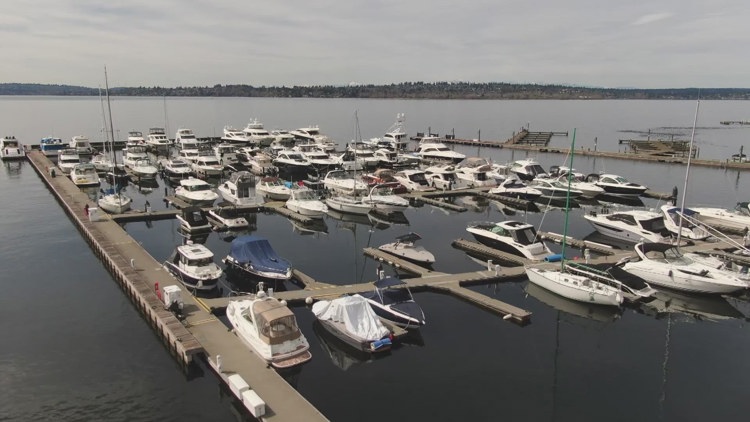
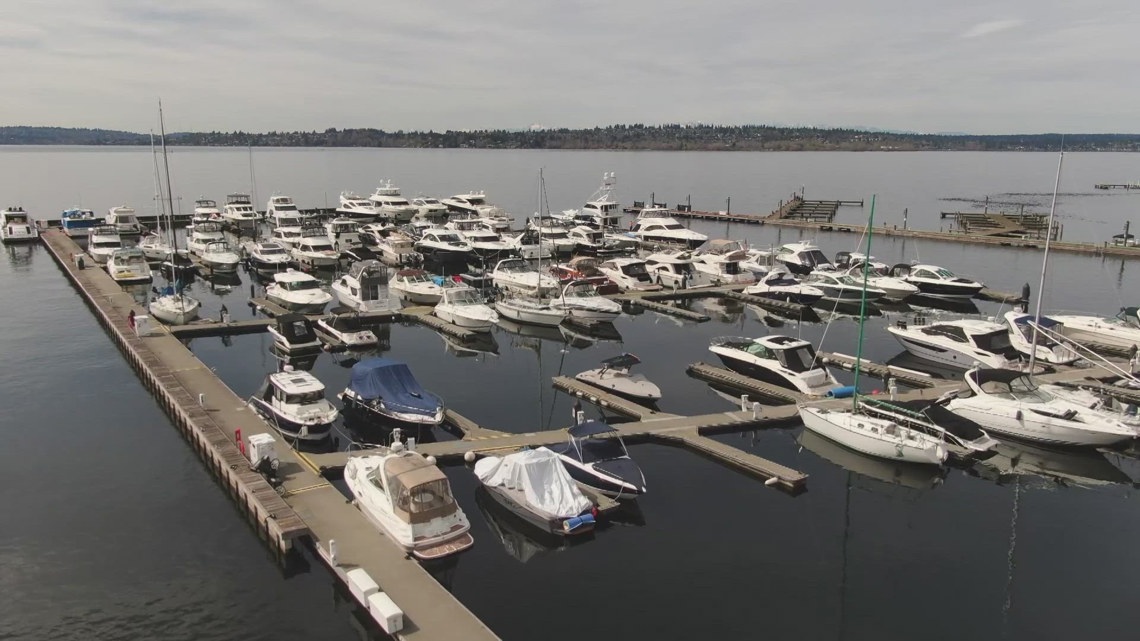
A muskrat keeps burrowing into old dock floats made of polystyrene. Residents say it’s been problem for over a year.

KIRKLAND, Wash. — Tiny white specks of polystyrene foam have been washing up along the shores of Lake Washington at Kirkland’s Homeport Marina for more than a year, polluting the water and littering the shore.
Michelle Alton-Kaehler first noticed the foam debris in February 2025 during her morning walks along the marina beach. She soon identified the source: deteriorating foam floating beneath aging docks, chewed apart by muskrats seeking shelter.
“This is something that is preventable. We can do something about it,” Alton-Kaehler said.
What followed was a year-long effort to get someone to fix the problem.
“I’m very exasperated, as you can imagine,” she said, explaining that the foam’s been cleaned up before but keeps reappearing. “Super, super frustrated because it means that there was a cleanup but no replacement. The solution is a replacement of the dock floats.”
Polystyrene foam, commonly known as Styrofoam, is toxic to wildlife and increasingly recognized as a human health concern as it breaks down into microplastics. Washington state banned the use of exposed polystyrene foam in new dock construction and repairs effective January 2024, requiring all foam to be fully enclosed in shells made of plastic at least 0.15 inches thick, concrete, aluminum or steel. But the law is not retroactive, leaving older docks grandfathered in.
Photographs from throughout 2025 show the foam floating in the water, scattered among waterfowl, and clinging to boats and concrete structures. Residents say the debris has been cleaned up multiple times, only to return.
Julie Underwood, Kirkland’s public works director, confirmed the city has documented the problem “maybe half a dozen times over the last year.”
“What’s causing it is the muskrats are burrowing into that foam, the polystyrene foam, for shelter,” Underwood said.
The Washington State Department of Ecology became involved after receiving reports through its Environmental Report Tracking System in February 2025, submitted by the city on behalf of Alton-Kaehler. Between July and September 2025, state officials communicated with the city, the state Department of Fish and Wildlife, the marina and residents.
On Feb. 18, 2026, Ecology issued a letter to the marina’s property manager, PMF Investments, acknowledging “ongoing water pollution” and citing a violation of state water pollution control law. But the letter offered only recommendations, not requirements, including fully replacing remaining polystyrene foam blocks, inspecting and cleaning shorelines, and documenting all cleanup efforts.
“We prefer to work cooperatively with property owners and/or site managers to ensure clean water,” the letter stated.
Jay Fennell, a watershed protection supervisor with Ecology’s Northwest Region office, told Alton-Kaehler in a March email that “the letter concludes Ecology’s direct involvement with the property for now,” asking residents to submit new reports if pollution continues.
The approach frustrated Alton-Kaehler, who said she wanted enforcement, not voluntary compliance.
“I started out, you know, wanting to collaborate with people and have conversations that look for good solutions that we could work out together. But when I don’t see any action happening, I feel pretty angry,” she said.
A spokesperson for the marina said they plan to replace the damaged foam floats with hardened flotation barrels that meet Department of Ecology standards and install a barrier to prevent wildlife access. The marina said repairs would be completed by the first week of April.
“The marina is routinely serviced three times per week to maintain water quality and site conditions,” the statement said. “In addition, a dive team conducts quarterly inspections above and below the waterline; the most recent inspection occurred March 15, confirming this damage is recent.”
The characterization of the damage as recent conflicts with documentation from residents and city officials spanning about a year.
The city is now considering whether existing local codes could compel faster action or whether new ordinances are needed. Underwood said the city wants to avoid being “super heavy handed” with property owners but acknowledged the city council has directed staff to address the environmental impact “as quickly as we can.”
The issue may not be limited to one marina. Lake Washington’s shoreline is dotted with docks, many constructed before the 2024 foam ban took effect.
“You can see the entire lake is full of docks,” Underwood said. “In the future, once this dock is replaced and we see future foam, where’s that coming from? It could be coming from Seattle. It could be coming from Bellevue.”
The city does not know how many docks in Kirkland’s jurisdiction contain exposed polystyrene foam or would be affected by a potential ordinance requiring upgrades.
Alton-Kaehler said she hopes other lakefront property owners will see the problem and take action before regulators force them to.
“The process has required a lot of polite letters and requests for action before one can get to any serious enforcement,” she said. “It feels like there’s a lot of bureaucracy, and I really want to see some action on this because it isn’t just these docks here.”

To ensure diverse coverage and expert insight across a wide range of topics, our publication features contributions from multiple staff writers with varied areas of expertise.
