
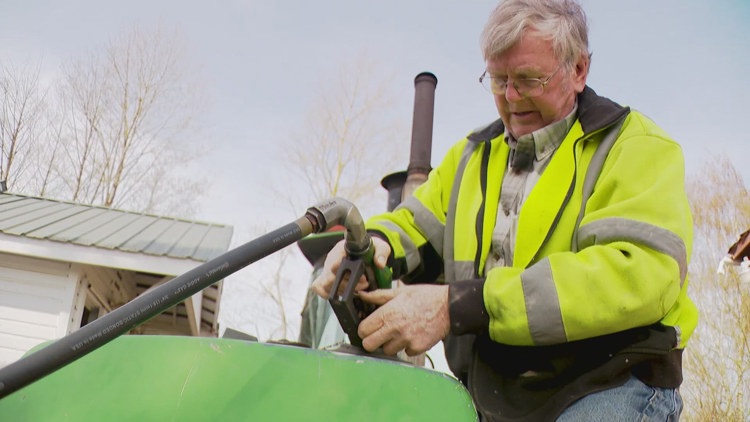
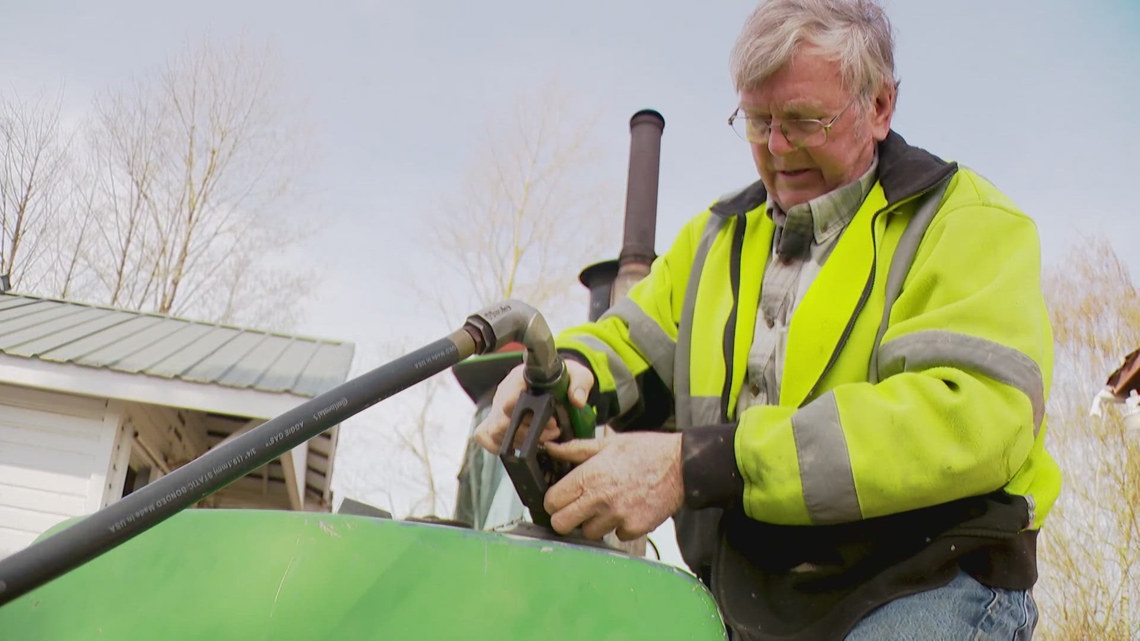
Washington farmers are struggling as diesel prices spike 35% and fertilizer costs climb 30%, with the state ranking last in farm profitability.

LA CONNER, Wash. — Washington state is feeling the squeeze at the fuel pump and nowhere is that more apparent than on the farms that feed the region.
Diesel prices have hit record highs across the state, reaching as much as $7.29 a gallon, with no relief in sight. For western Washington farmers already operating on razor-thin margins, the spike is threatening livelihoods that span generations.
Dave Hedlin has farmed the same Skagit Valley land for decades. He calls his grandson Will “G5,” the fifth generation of family to walk the property. By necessity, Hedlin is an optimist, but these days, that optimism is harder to hold onto.
“Yeah, for the first time it’s hard to make things work,” Hedlin said. “It’s gloomy.”
Diesel costs are up 35% since last year. Fertilizer has climbed another 30%. Meanwhile, farmers are struggling to recoup those losses.
“I have to be honest. When we squeaked out a budget this year we did not anticipate somebody would start a war in the Mideast and drive fuel and fertilizer prices through the roof,” Hedlin said.
It’s a double blow, triple, when factoring in tariffs imposed during the Trump administration that is stalling the engine running Hedlin Farms.
“All these prices have increased and the prices we’re getting for our product is pretty much flat for the last three years,” Hedlin said. “I understand people are struggling to pay for food, but at the same time a lot of farmers are struggling to pay for food, too. There’s something wrong with that picture.”
Jason Vander Kooy, vice president of the advocacy group Save Family Farming, said Washington farmers were already paying some of the the highest fuel prices in the nation before the conflict in Iran, the result of high state fuel taxes and what he called a botched exemption of farming from the Climate Commitment Act.
“Much of Washington state’s farming can’t survive much longer without serious help from Olympia — not in handouts, but in reversing the enormous cost burdens the state has placed on farmers,” Vander Kooy said. “If Olympia does not act now to reduce these state-driven costs, many farms will not recover and once they’re gone, they’re not coming back.”
The financial pressure comes amid a new report ranking Washington state last in farm profitability in the nation. The state is losing nearly one farm per day to consolidation or foreclosure.
A recent survey found just 52% of Washington farmers expect to turn a profit this year, with that number expected to drop further in 2026, a trend that will eventually be felt by consumers at the grocery store.
“I hate to do it, but we’re not gonna survive unless we pass these costs on to our customers,” Hedlin said. “We know the American consumer is struggling, as well.”
For now, Hedlin works to remain optimistic that his 120-year-old farm will survive long enough to be passed to G5.
“I’m incredibly proud to be the third generation on this family farm and you don’t want to be the one to let it go,” he said.

To ensure diverse coverage and expert insight across a wide range of topics, our publication features contributions from multiple staff writers with varied areas of expertise.
