
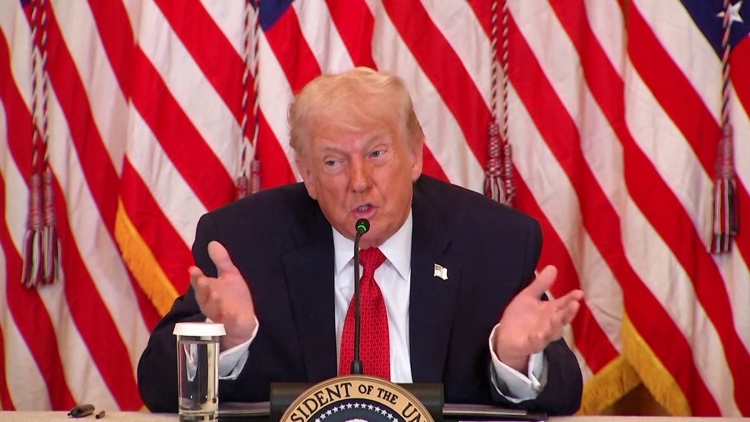
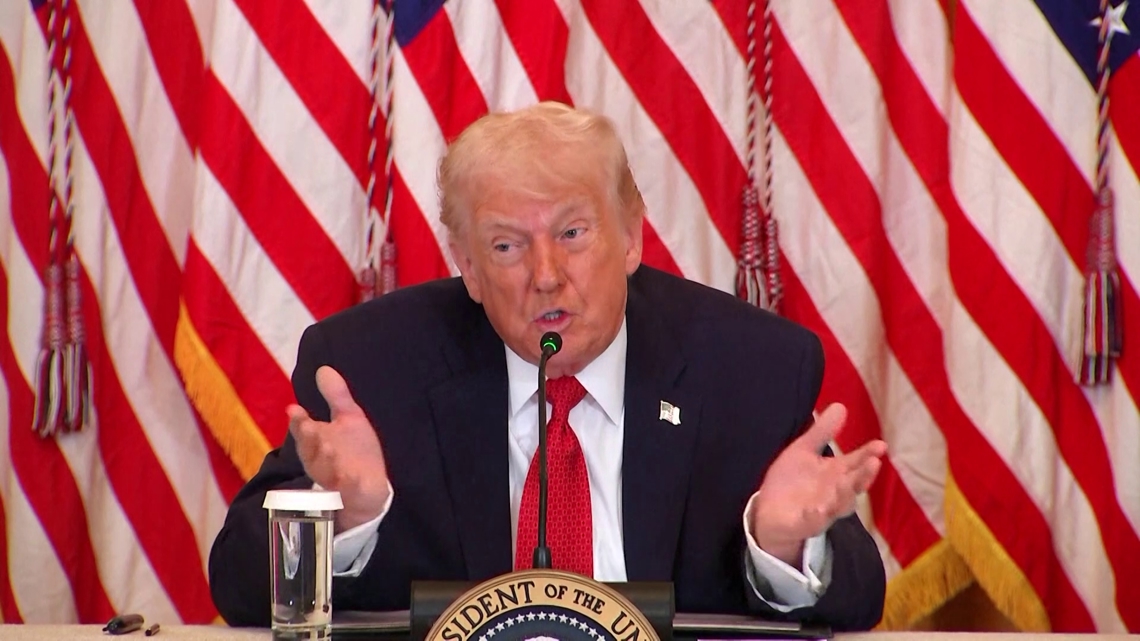
President Trump threatened NATO allies with tariffs until the U.S. can purchase Greenland. That could jeopardize Washington’s $6.6 billion annual trade relationship.

SEATTLE — President Donald Trump’s new aggressive push to acquire Greenland has economic consequences that threaten to disrupt decades of established trade relationships and squeeze businesses across Washington State.
Over the weekend, the president announced that the U.S. will impose tariffs on eight European countries — all NATO allies — starting at 10% on Feb. 1 and escalating to 25% by June unless Denmark agrees to sell Greenland to the United States.
For Ballard’s Scandinavian Specialties, the announcement hit differently. The store, which has operated since 1962, imports 75 to 80% of its inventory from Nordic countries directly impacted by the tariff threat.
“We already have products from some of the wealthiest countries on the planet that are already high priced, high quality products,” said Bjorn Ruud, the store’s owner. “So you add 10%, or you have 25%. That makes a big difference on my end.”
The tariff threat comes as Ruud and other import-dependent businesses are already struggling with cumulative trade pressures. Over the past two years, shipping fees have steadily eroded Ruud’s profit margins.
“Shipping fees and customs duties have been tacked on over the last couple years, and it’s made it so that our profit line dwindles annually,” Rude said. “It just shrinks and shrinks and shrinks. And it puts us all in a tough position when we’re trying to pay our rent, pay employees fairly, and trying to create a profit in the business.”
Ruud’s profits have declined 15%, with shipping costs accounting for the largest hit to his bottom line.
“Last year I’ve eaten a lot of costs. And seeing our profits dwindle, I can’t continue eating the costs,” Rude said.
The impact of these tariffs extends far beyond specialty grocery stores. Washington state’s economy is deeply integrated with European trade, making it particularly vulnerable to escalating trade tensions.
The European Union is the U.S.’s largest trading partner and Washington state’s second largest export market. The state exports $6.6 billion in goods to the European Union annually, with more than half — $3.82 billion — in aerospace products and parts.
That makes Boeing a potential casualty if trade tensions escalate further.
Sen. Patty Murray has already sounded the alarm. In a post on X, she wrote: “To my Republican colleagues: ENOUGH. It’s time for the Senate to block these tariffs and to block the use of military force against Greenland.”
Treasury Secretary Scott Bessent defended the president’s actions in an interview on Meet the Press, characterizing the tariffs as a matter of national security.
“The national emergency is avoiding a national emergency,” Bessent said. “It is a strategic decision by the president. This is a geopolitical decision. And he is able to use the economic might of the U.S. to avoid a hot war.”
At Scandinavian Specialties, Ruud said his customers have been vocal about their concerns.
“Our customers see it. They’re worldly folk. They keep their ear to the news, especially related to Scandinavia. They kind of know what’s going on,” Ruud said.
For Ruud, who is of Norwegian descent, the situation hits particularly close to home. But he is drawing on decades of business experience to navigate the uncertainty ahead.
“I’m going to show up today and run this business as well as I can, and we’ll see what happens tomorrow,” he said.

To ensure diverse coverage and expert insight across a wide range of topics, our publication features contributions from multiple staff writers with varied areas of expertise.
