
In a world where attention can be bought, borrowed, or briefly hacked, one form of capital still refuses to be gamed. It doesn’t care about job titles, follower counts, or polished branding. It can’t be demanded, scheduled, or negotiated into existence. And once it’s lost, it’s rarely restored by a press release.

That is the central tension driving The Respect Effect: Your Guide to Growing Your Influence, Credibility and Exposure, the newest book from Sir David T. Fagan, a media-seasoned strategist and leadership voice whose career spans publishing, publicity, corporate training, and global stages. The book arrives at a time when reputations rise fast and fall faster, and it argues, calmly but firmly, that the most durable form of influence still starts with what people trust about you when you’re not in the room.
This is not a manifesto for executives only, nor a narrow business manual filled with jargon. It reads more like a modern field guide for anyone trying to build a life that holds weight: professionals navigating corporate pressure, entrepreneurs balancing visibility and substance, creatives seeking credibility, and everyday people trying to grow without losing themselves.
A Different Kind of Leadership Book: Less Hype, More Gravity
Fagan’s central argument is straightforward: in environments crowded with talent, ambition, and credentials, trust is often the missing element. As a result, the book places less emphasis on visibility for its own sake and more on the conditions that make influence durable. It asks what it means to be consistently relied upon, not just briefly noticed.
Rather than offering shortcuts, the book frames progress as an accumulative process. Influence develops over time as conduct, communication, reliability, and judgment begin to align. The argument is notably unsentimental. Advancement, it suggests, is less about asserting importance and more about establishing a record that others recognize and respond to.

The Author Behind the Argument: A Record Built Across Boardrooms, Campuses, and Cameras
There’s a reason Fagan can write about credibility without sounding theoretical. His background is built on proximity to high-stakes performance and public scrutiny. He is the former CEO of Guerrilla Marketing, the globally recognized series that has sold over 23 million copies across 62 languages, and a former owner of LCO Communications, a Beverly Hills PR firm known for representing major award winners and bestselling authors.
His profile extends beyond publishing into television and live events, with appearances on programs such as Fox & Friends and The Today Show, as well as features in outlets like Forbes, Investor Business Daily, and USA Today. He has also lectured at universities from UCLA to Kenyatta University, and partnered with the United Nations’ Global Youth Empowerment initiative on service-driven projects. Add to that a White House Presidential Lifetime Achievement Award, the KEAP/Infusionsoft Entrepreneur Educator of the Year recognition, and a 2025 knighthood from the Royal Order of Constantine the Great and Saint Helen, and you begin to understand the book’s subtext: this isn’t advice from the sidelines.
Yet the most compelling part of the author’s credibility may be less about accolades and more about temperament. People who’ve seen him teach describe a leader who welcomes curiosity: someone who doesn’t just tolerate questions, but treats them as proof that learning is alive. In an era of lecture-driven “leadership,” that posture alone is quietly differentiating.
The Hidden Mechanics of Being Taken Seriously
One of the book’s strongest contributions is its refusal to romanticize hard work as a guaranteed path to recognition. Many people, Fagan suggests, are exerting enormous effort while staying stuck, because they confuse activity with influence, or performance with trust.
The Respect Effect reframes the challenge: the goal isn’t to be the busiest person in the building; it’s to become the person others rely on when the stakes are real. That shift matters because modern work culture often rewards optics until reality arrives. When pressure hits, the people who rise are rarely the loudest. They’re the ones whose presence signals steadiness: the colleague who follows through, the manager who stays composed, the founder who keeps their word, the professional who doesn’t need a spotlight to do excellent work.
This is also where the book draws a sharp line between persuasion and something darker. Influence without a moral center can quickly resemble manipulation; effective in the short term, costly in the long term. Sustainable influence, the book argues, requires an inner discipline that makes others feel safe, not used.
The “No-Talent” Advantage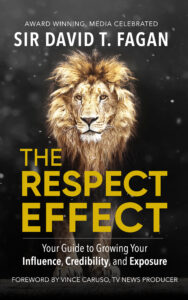
Not every insight in The Respect Effect is complex. Some are disarmingly basic, which may be why they work.
Fagan highlights behaviors that require no special gift, no elite education, and no rare charisma, only consistency. Showing up on time, remaining coachable, being prepared, bringing energy, keeping a constructive attitude, working hard, and staying passionate about doing the job well.
None of these wins awards on their own. But in real workplaces, these are the signals that leaders notice first. Reliability often speaks before brilliance. And when those habits become a pattern, they create a reputation that travels ahead of you.
Resilience as Proof
A surprising theme running through the book is that credibility isn’t earned through a spotless record; it’s earned through what happens after failure. Anyone can look competent when circumstances are easy. The test is what you do when the plan breaks, when the outcome disappoints, when you’re tempted to retreat or blame.
Here, the message isn’t harsh; it’s clarifying: the people who last aren’t the ones who never fall. They’re the ones who refuse to stay down, and who return with humility, clarity, and improved execution.
In that framing, success isn’t a single event. It’s momentum. The more often you are chosen, trusted, relied on, and invited back, the more likely you are to be chosen again. Not because you’re lucky, but because people begin to associate you with outcomes.
The Quiet Power of How You Treat People
The Respect Effect also expands the conversation beyond performance into how we handle human relationships, especially when emotions fluctuate or disagreement enters the room.
It argues that dignity is not reserved for people we admire or agree with. The real test is whether you can treat others well when frustration hits, when pressure rises, when you’re challenged. This is where leadership stops being a role and becomes a way of life: embracing boundaries, practicing fairness, listening attentively, and maintaining steadiness under stress.
Just as importantly, the book emphasizes an outward-facing posture: credibility grows when you shine attention on others. People don’t forget the colleague who gives credit, the leader who protects their team, or the mentor who opens doors without needing applause. In cultures that reward self-promotion, this kind of generosity can feel radical, and it tends to multiply influence in ways marketing can’t.
Crowd Vs. Counsel: The Difference Between Noise and Wisdom
One of the timelier ideas in the book is its distinction between the crowd and counsel. The crowd is volume: applause, opinions, trends, instant validation. Counsel is quieter: guidance from people who’ve earned the right to speak into your life through wisdom, experience, and proven care.
The modern world trains people to optimize for the crowd. The book invites a different question: who is shaping your decisions, and why? Because if your life is built on noise, it’s likely to wobble. If it’s being built with counsel, it tends to strengthen.
There’s a parallel insight here that feels especially relevant in corporate settings: people are rarely inspired by the trophy alone. They’re drawn to the road it took to earn it; the discipline, the restraint, the character revealed along the way. Titles impress for a moment. The journey earns longer attention.
The Inside Job
For all its outward focus, the book repeatedly returns to an uncomfortable truth: you can’t build a stable reputation while privately dismantling yourself.
Self-respect shows up first in the conversations you have with yourself, especially when you’re disappointed. The book frames growth as a choice between cultivating “weeds” (destructive internal narratives) or planting truth that produces better outcomes. It’s a simple metaphor with real psychological weight. Your inner voice becomes your leadership voice over time.
It also makes room for something many ambition-driven readers overlook: rest. Caring for your body isn’t framed as indulgence but as stewardship; an essential part of becoming consistent, clear, and resilient. If your life is built on burnout, your influence will inherit that instability.
Then there’s language. In one of the book’s most practically memorable ideas, Fagan ties personal elevation to the words we choose, because the mind is always listening. It’s not motivational fluff; it’s a reminder that language shapes perception, and perception shapes results. When you elevate your words, you often elevate your standards, your confidence, your clarity, and the way others interpret your presence.

The Concept of Lionization
Among the book’s bigger concepts is “lionization,” a term used to describe a level of recognition that goes beyond popularity. It signals authority rooted in courage, wisdom, and proven impact. In that realm, your name carries weight before you enter a room.
And here the book offers a blunt, modern reminder: success is not only about who you know. It’s also about who knows you and what they believe you represent. Visibility still matters. Not the frantic kind that chases attention, but the brave kind that steps into the light with substance, prepared to be evaluated.
This is where The Respect Effect becomes quietly challenging. It suggests that many people want recognition without exposure, influence without accountability, credibility without consistency. But growth doesn’t work that way. You attract what you have demonstrated you can sustain.
Why This Book Lands Now
There is no shortage of leadership books. What makes The Respect Effect distinctive is its insistence that character and results must stay connected. It treats credibility as something you build deliberately, through habits, integrity, emotional steadiness, excellence, and the willingness to lift others as you climb.
In today’s climate, where attention is cheap and certainty is loud, the book argues for something more durable: the kind of influence that doesn’t collapse under pressure because it was built on trust instead of performance.
Whether you’re leading a team, building a brand, reinventing your career, or simply trying to become more grounded and effective in your own life, this is a book that keeps pointing to the same conclusion, without shouting it: the most powerful form of advancement is earned slowly, proven repeatedly, and carried with care.
Learn more: https://davidtfagan.com/

To ensure diverse coverage and expert insight across a wide range of topics, our publication features contributions from multiple staff writers with varied areas of expertise.
